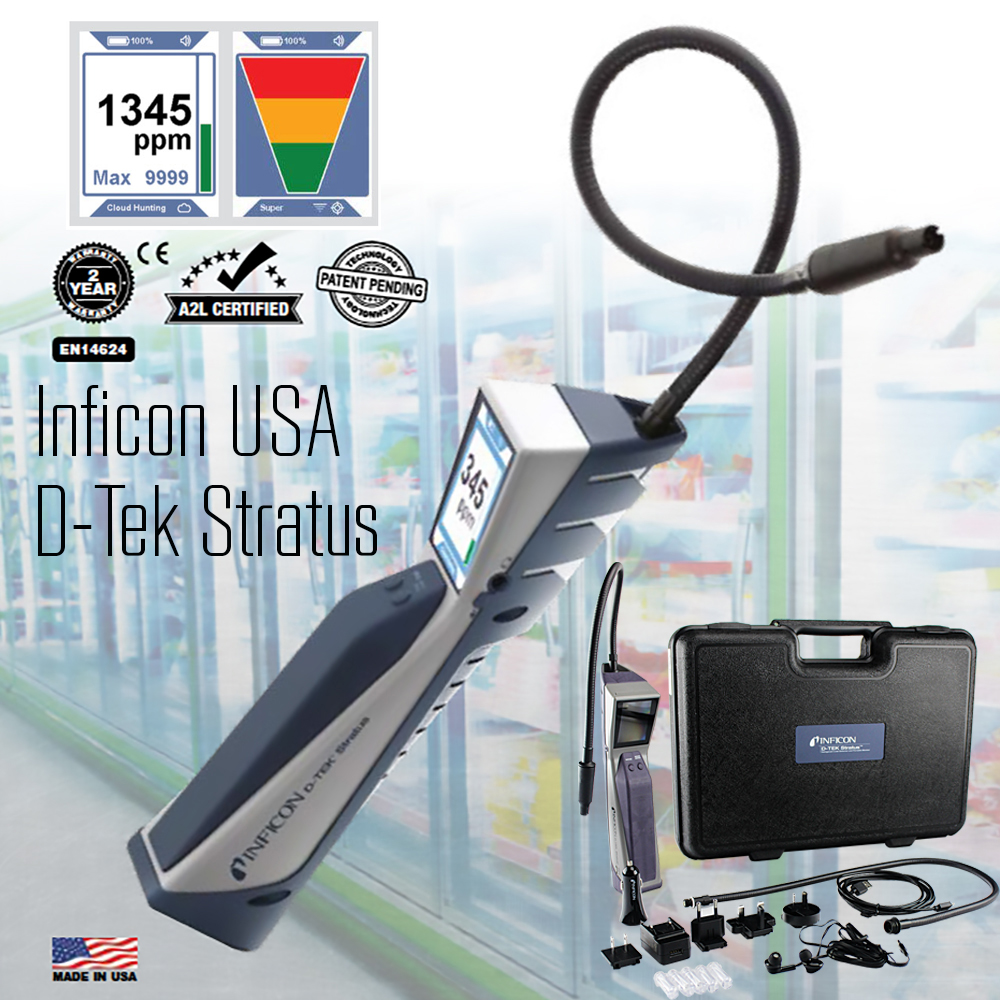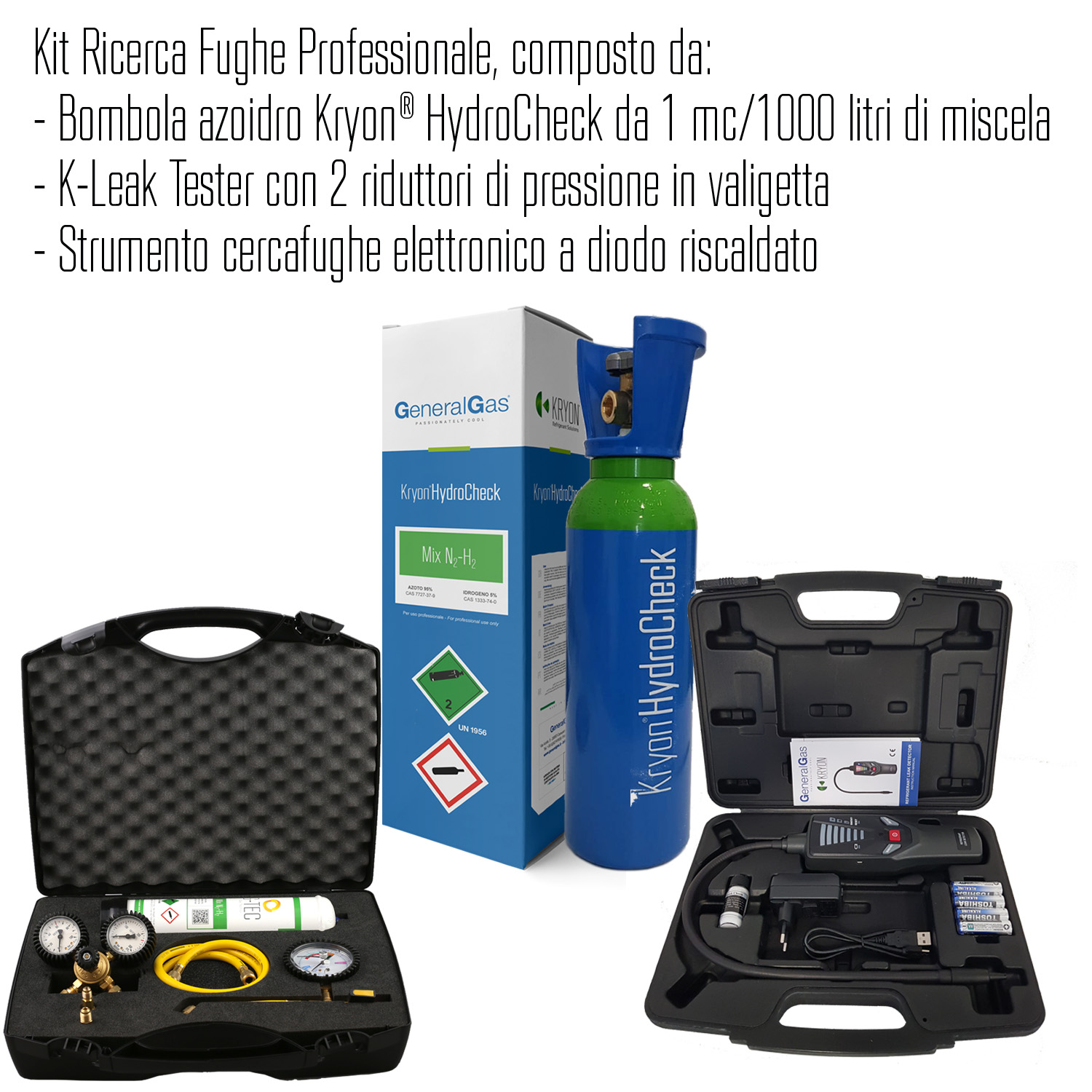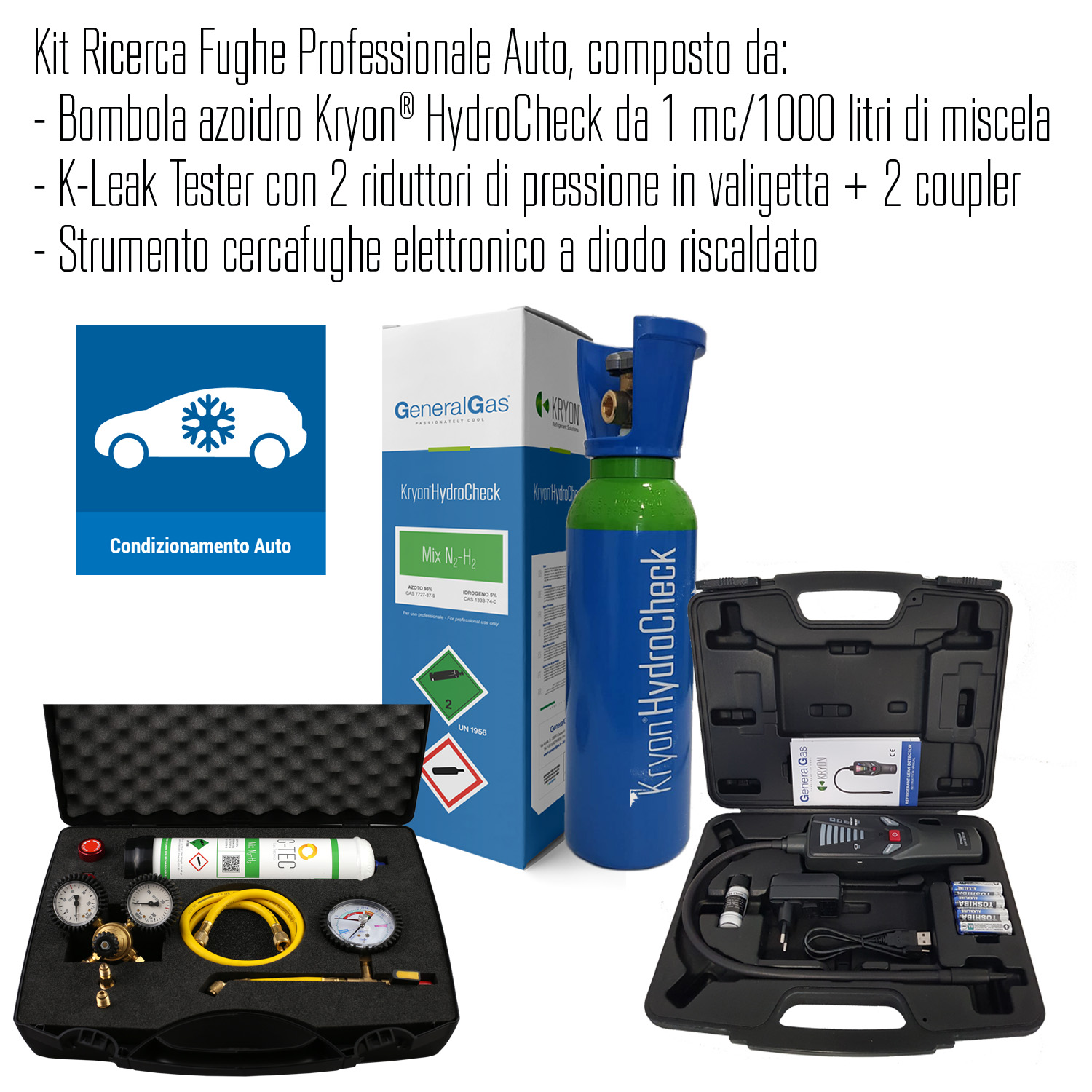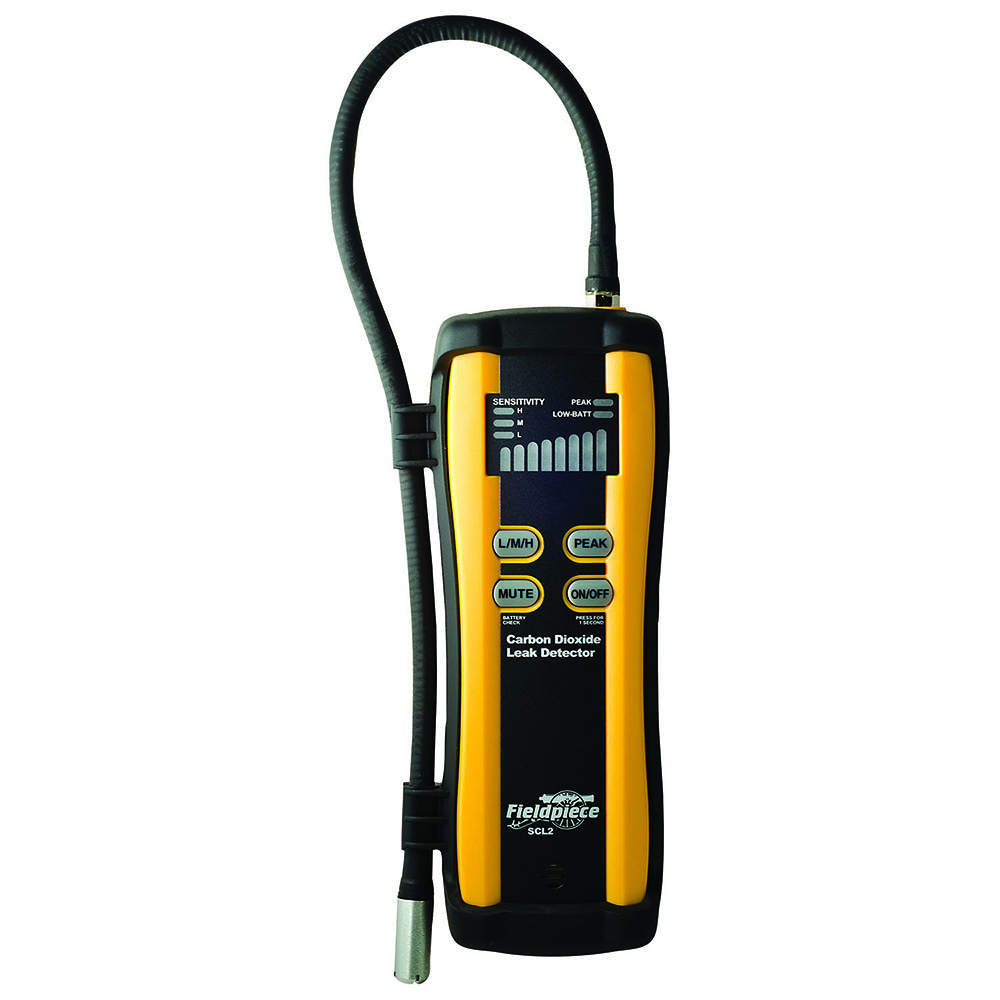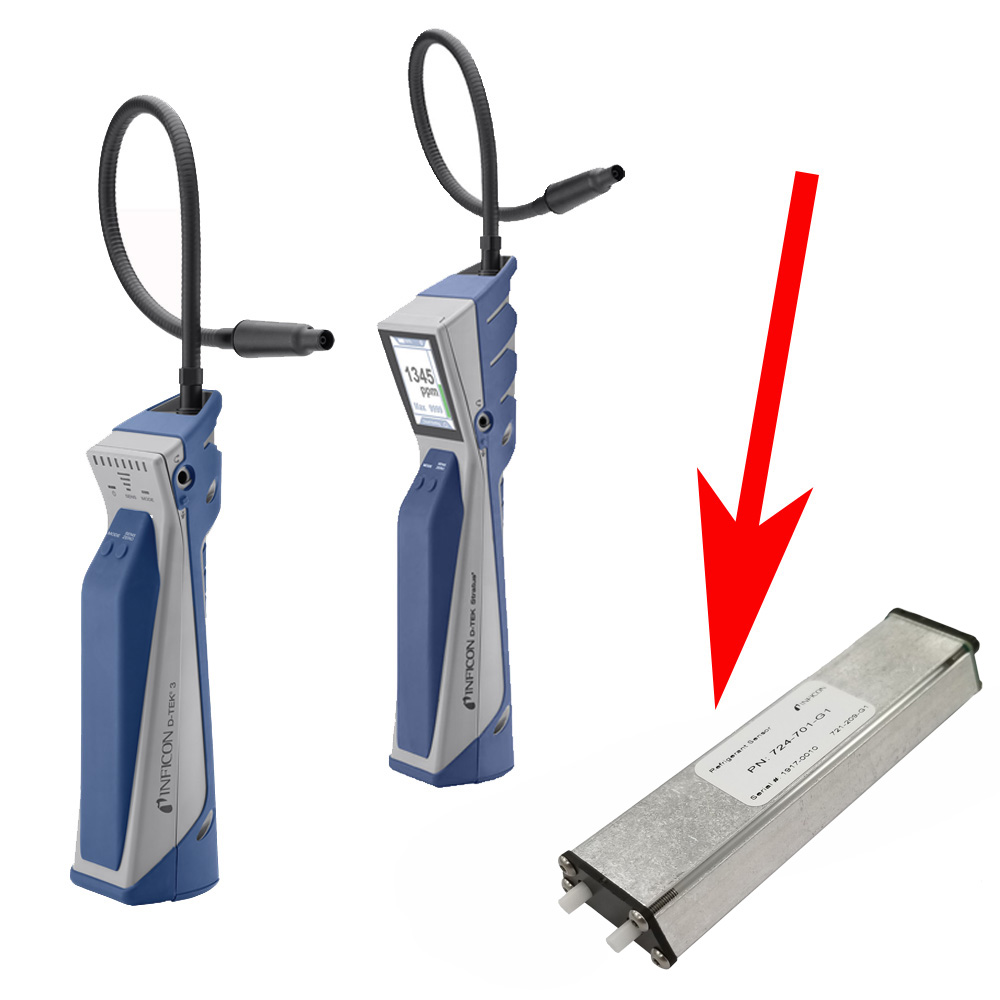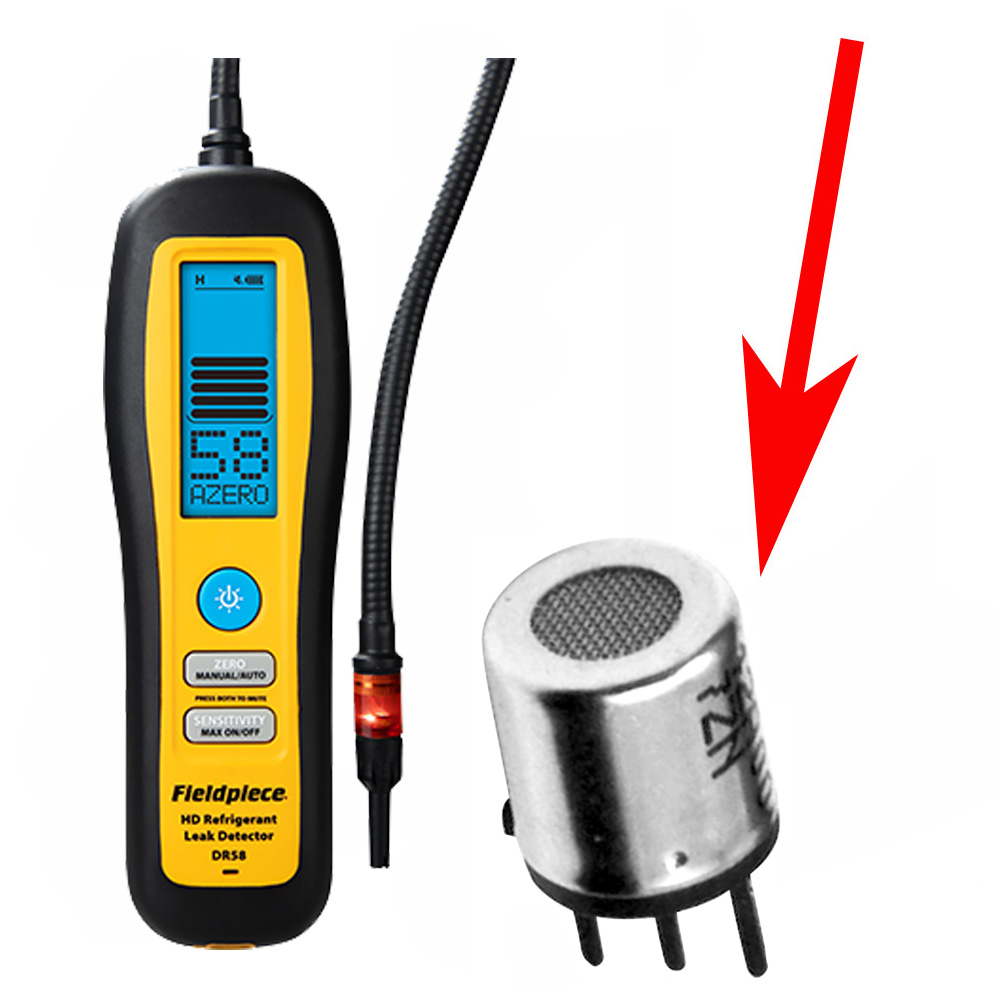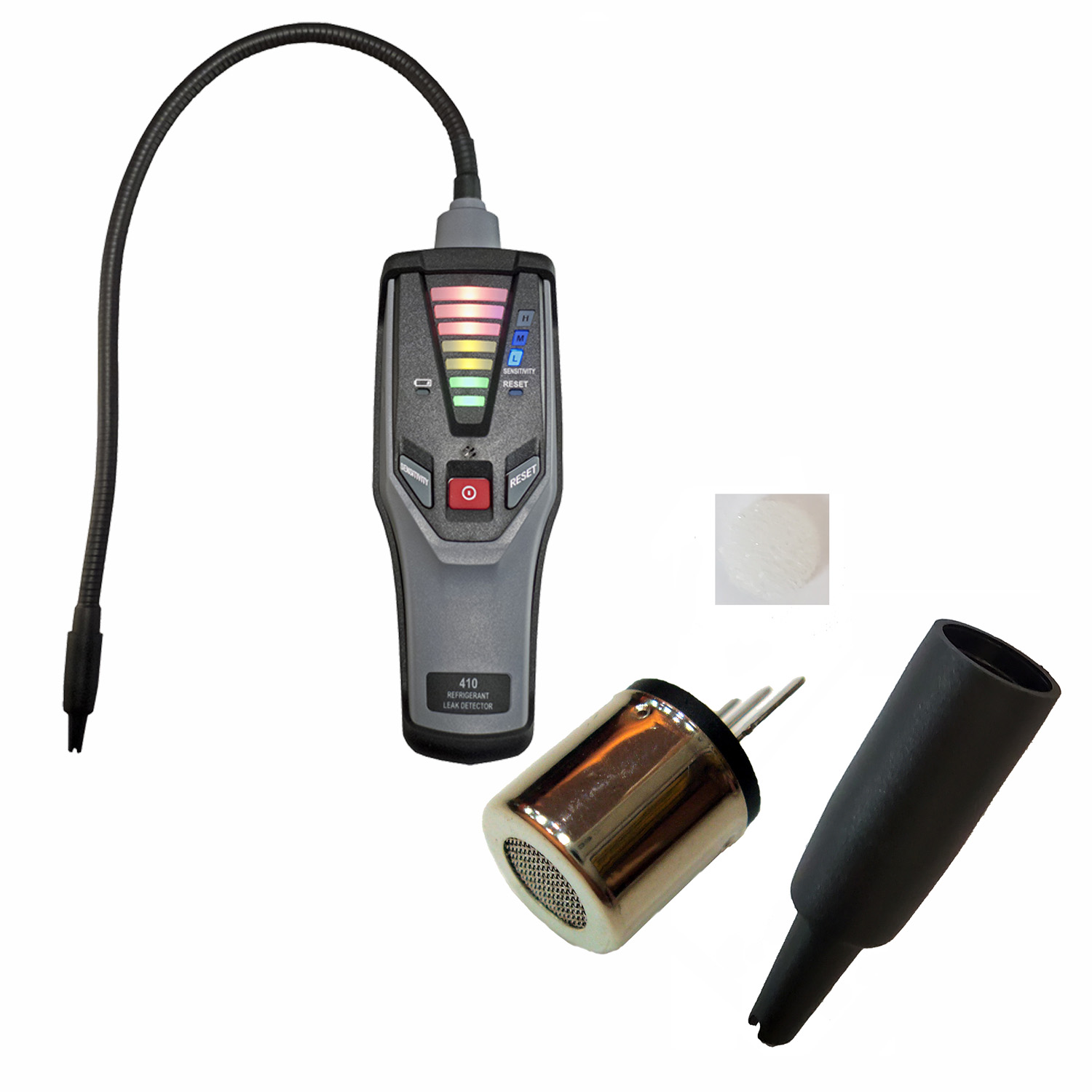
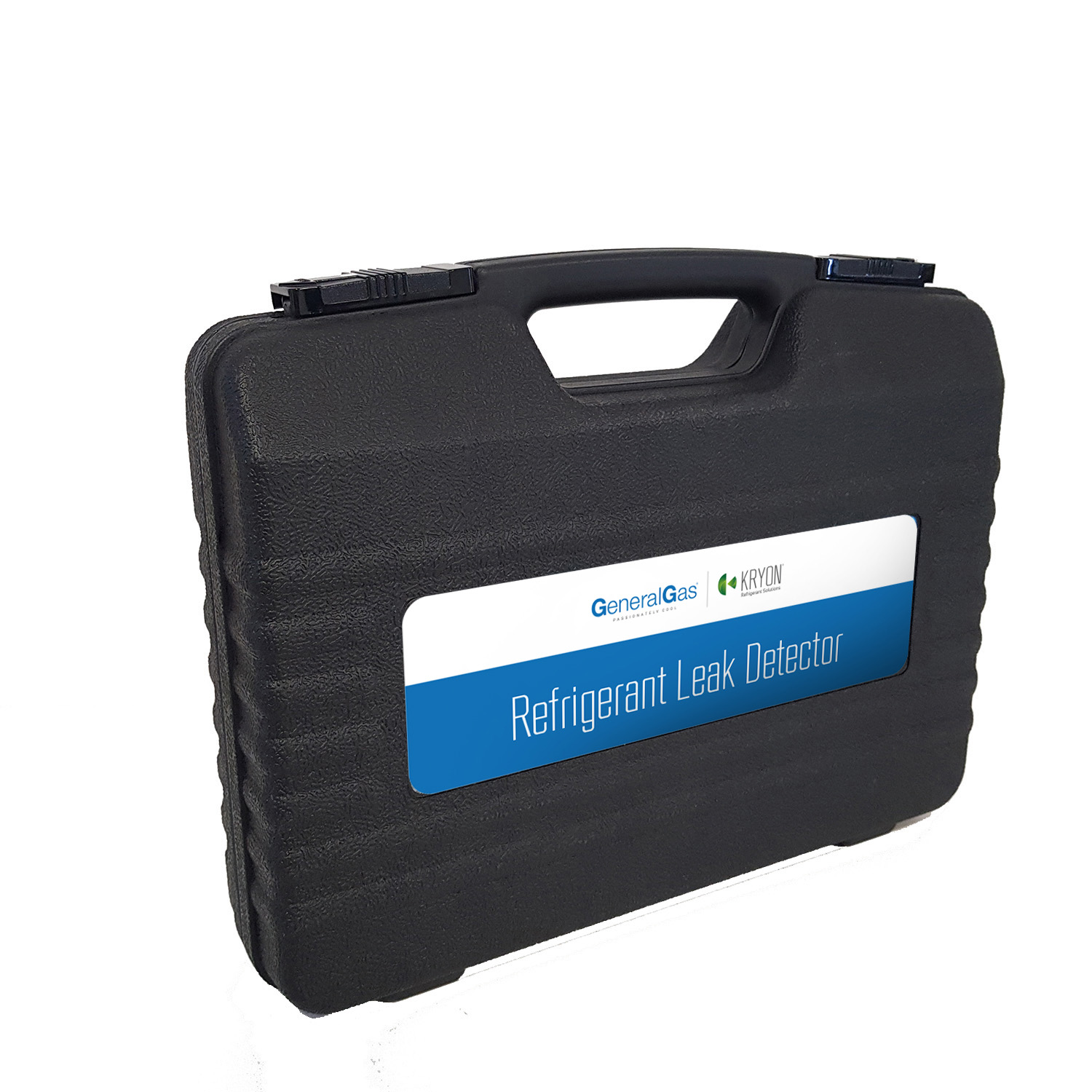








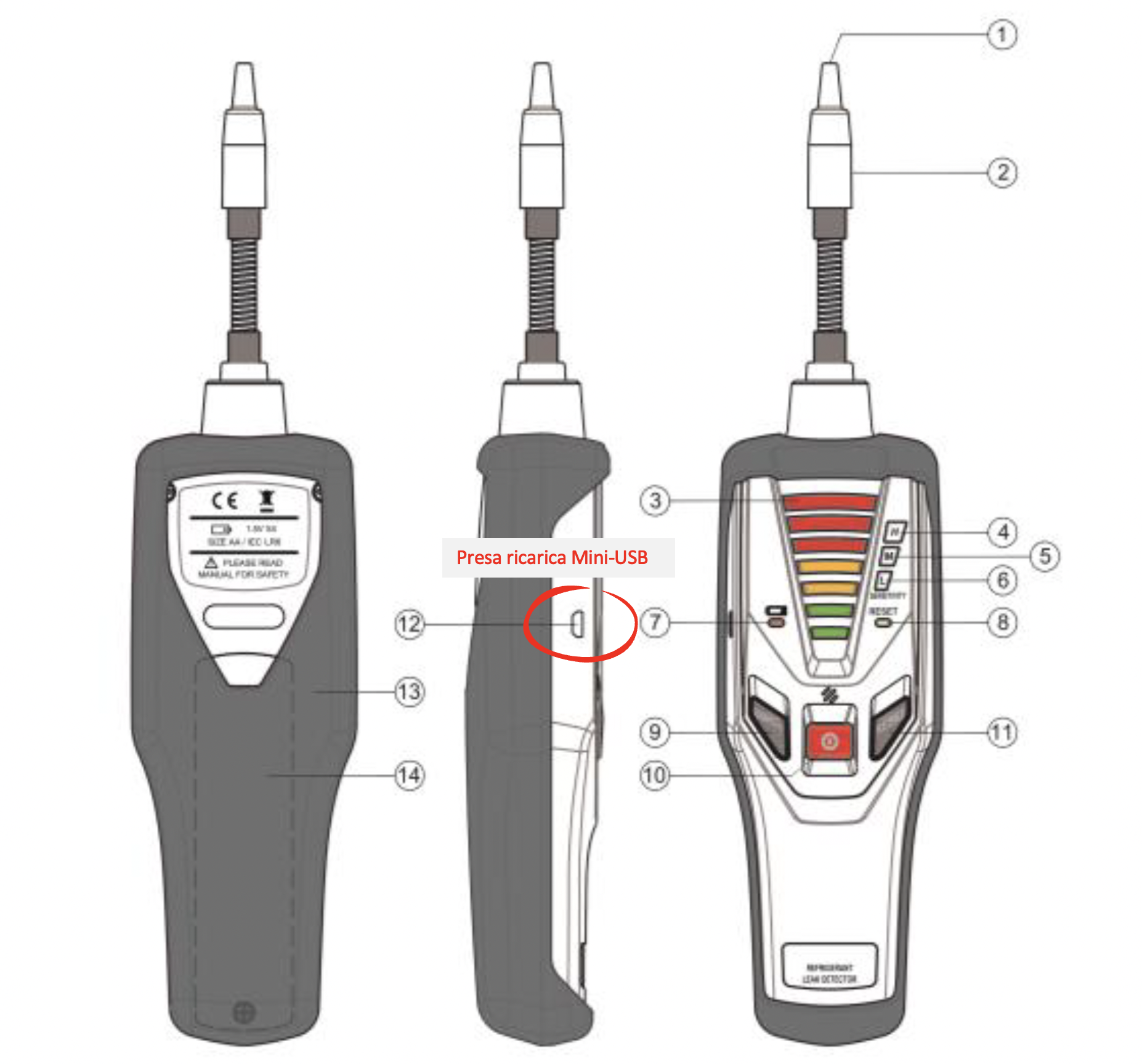
Heated diode electronic leak detector: detects nitrogen-hydrogen mixture (5% hydrogen + 95% nitrogen) and refrigerant gases R134a - R410A - R407C - R1234yf - R32 - R404A - R507 - R448A - R449A - R452A (technically also detects R600a - R290 - methane and HC in general)
Technical specifications:
Note: this leak detector is not ATEX certified, although it is technically capable of detecting gases containing hydrogen molecules, typical of hydrocarbons such as R290 and R600a
- Compliant with SAE J1627 CE regulations
- Heated semiconductor sensor
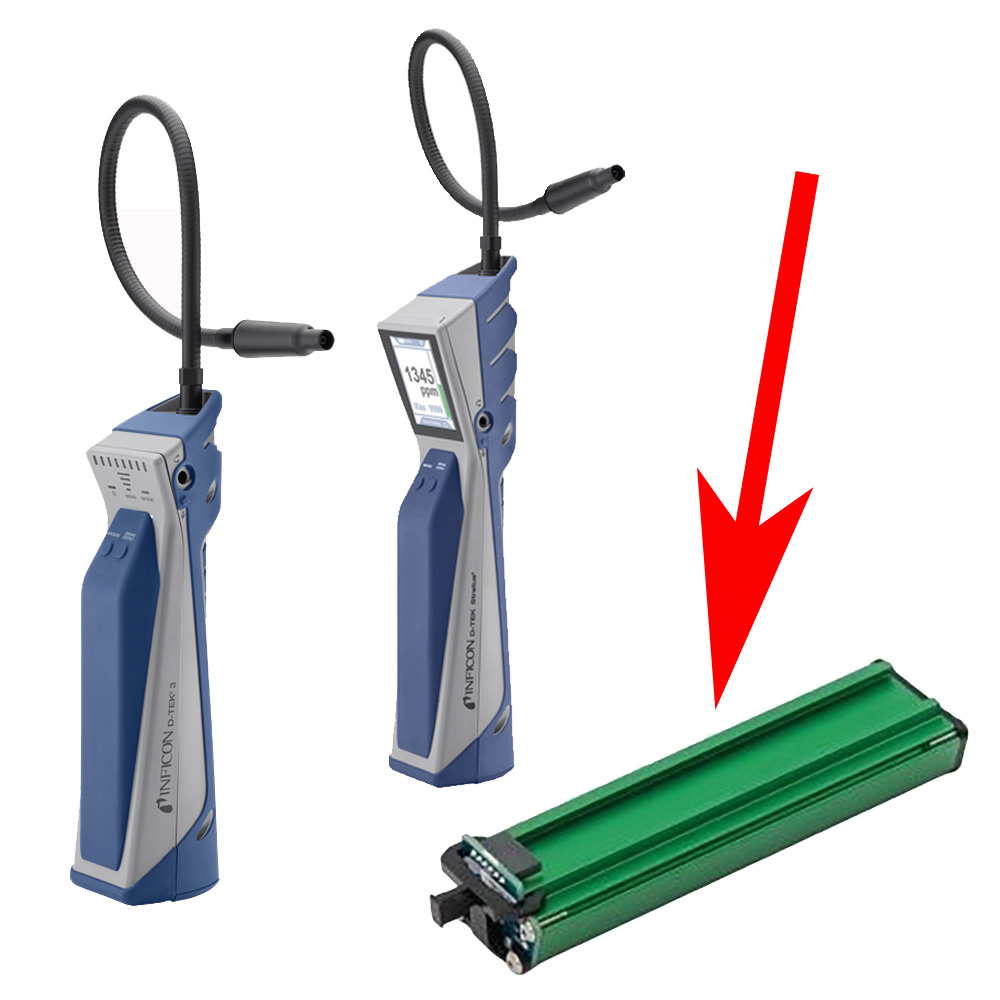
- Sensor lifespan approximately 300 hours of operation, corresponding to approximately one year of work (to purchase a replacement sensor click here)
- Sensitivity 5ppm (3 grams/year)
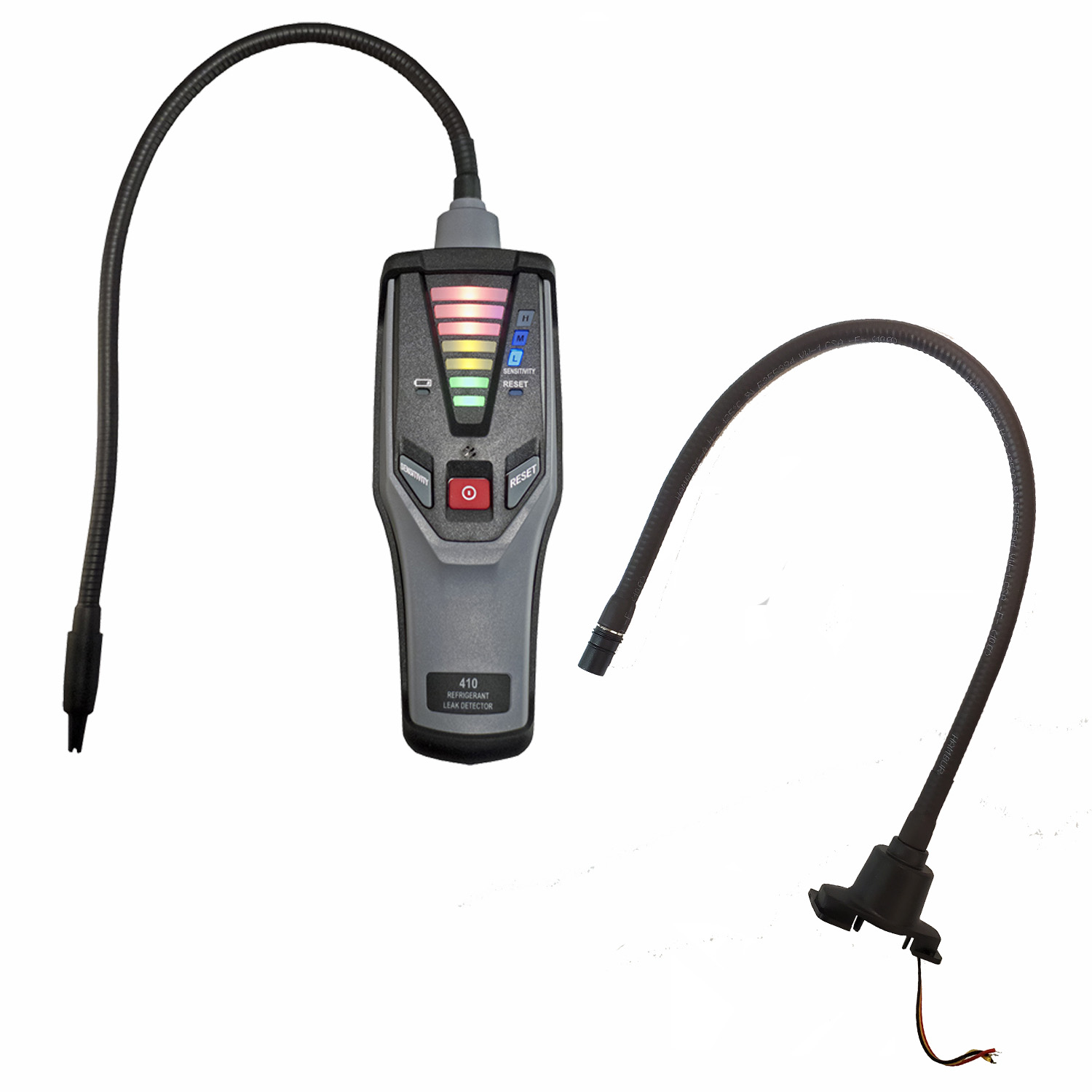
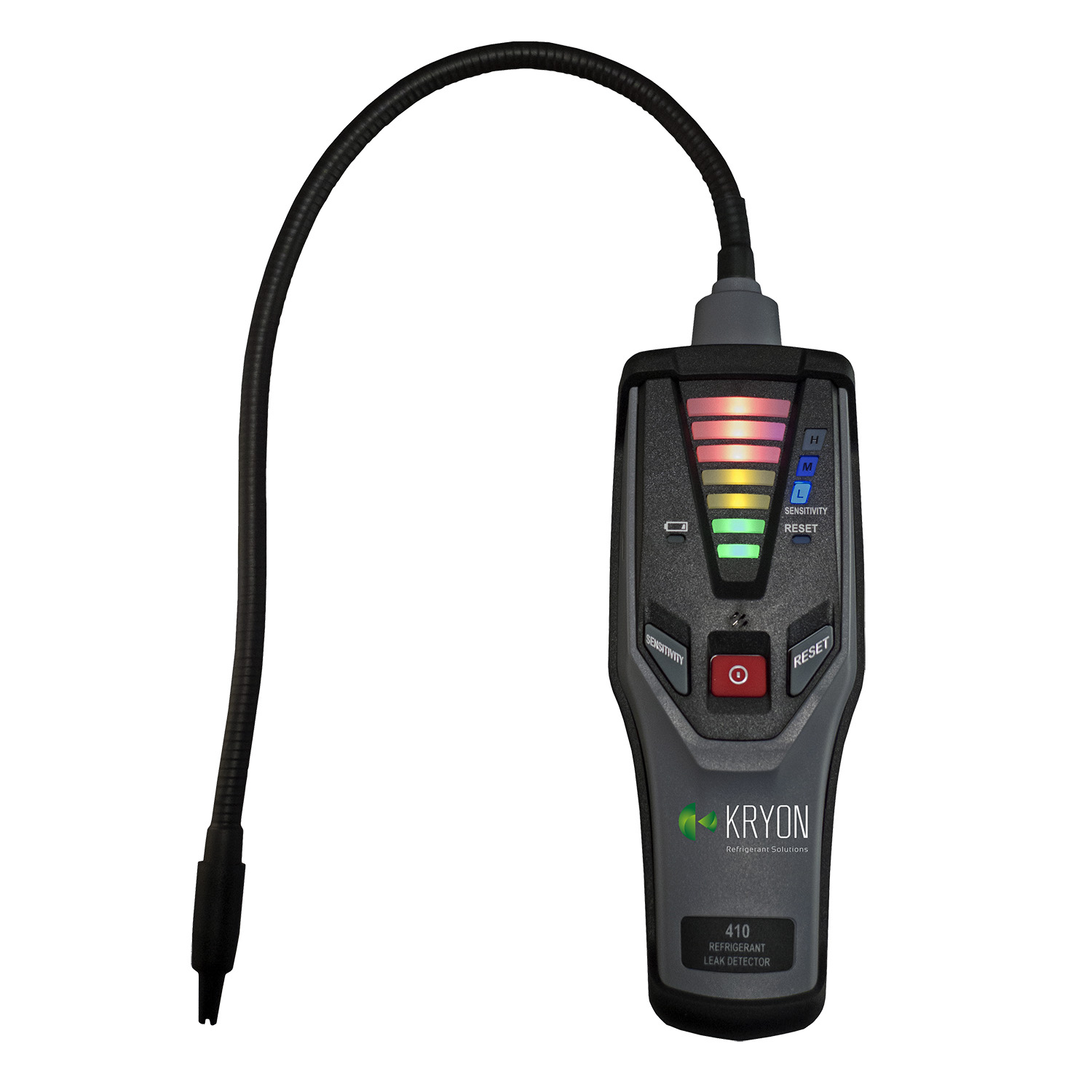
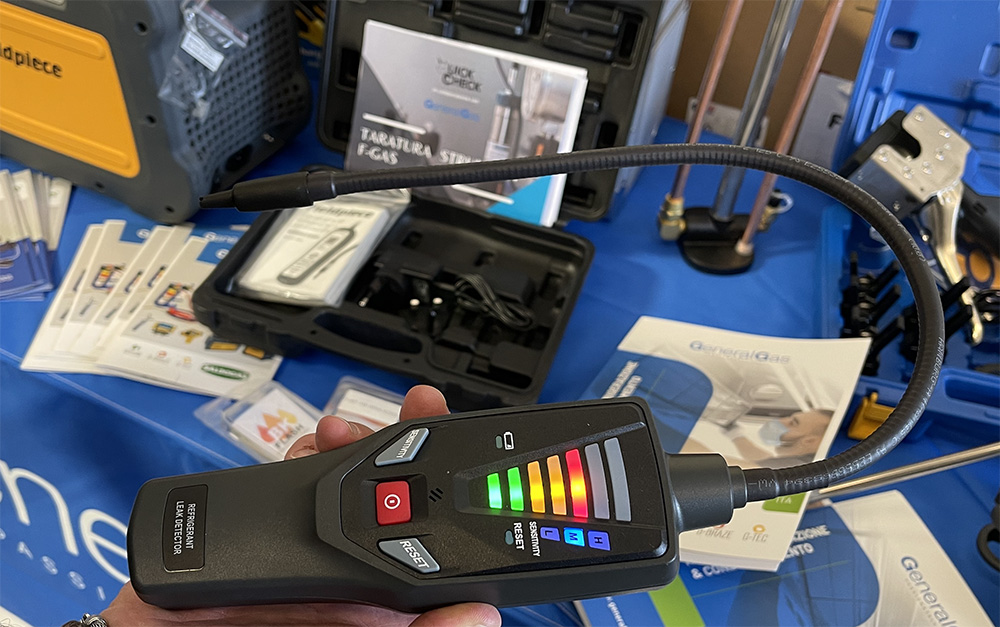
- 40 cm stainless flexible probe
- Operating temperature from 0 to 40°C
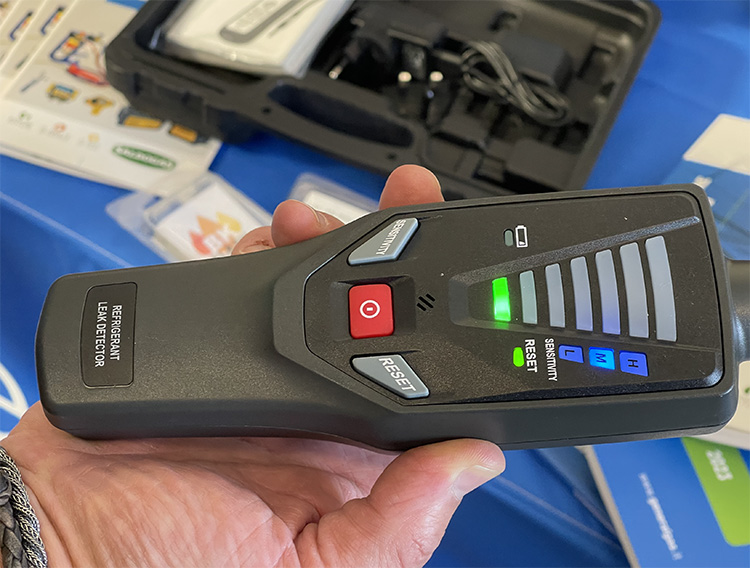
- 3 sensitivity levels
- Leak detection indicator with 7-LED three-color visual scale
- Detectable refrigerant gases: R134a - R1234yf - R410A - R404A - R407C - R449A - R449A - R452A - A2L blends - R32 (technically also detects R600a - R290 - Methane and HC in general, but this leak detector is not ATEX certified)
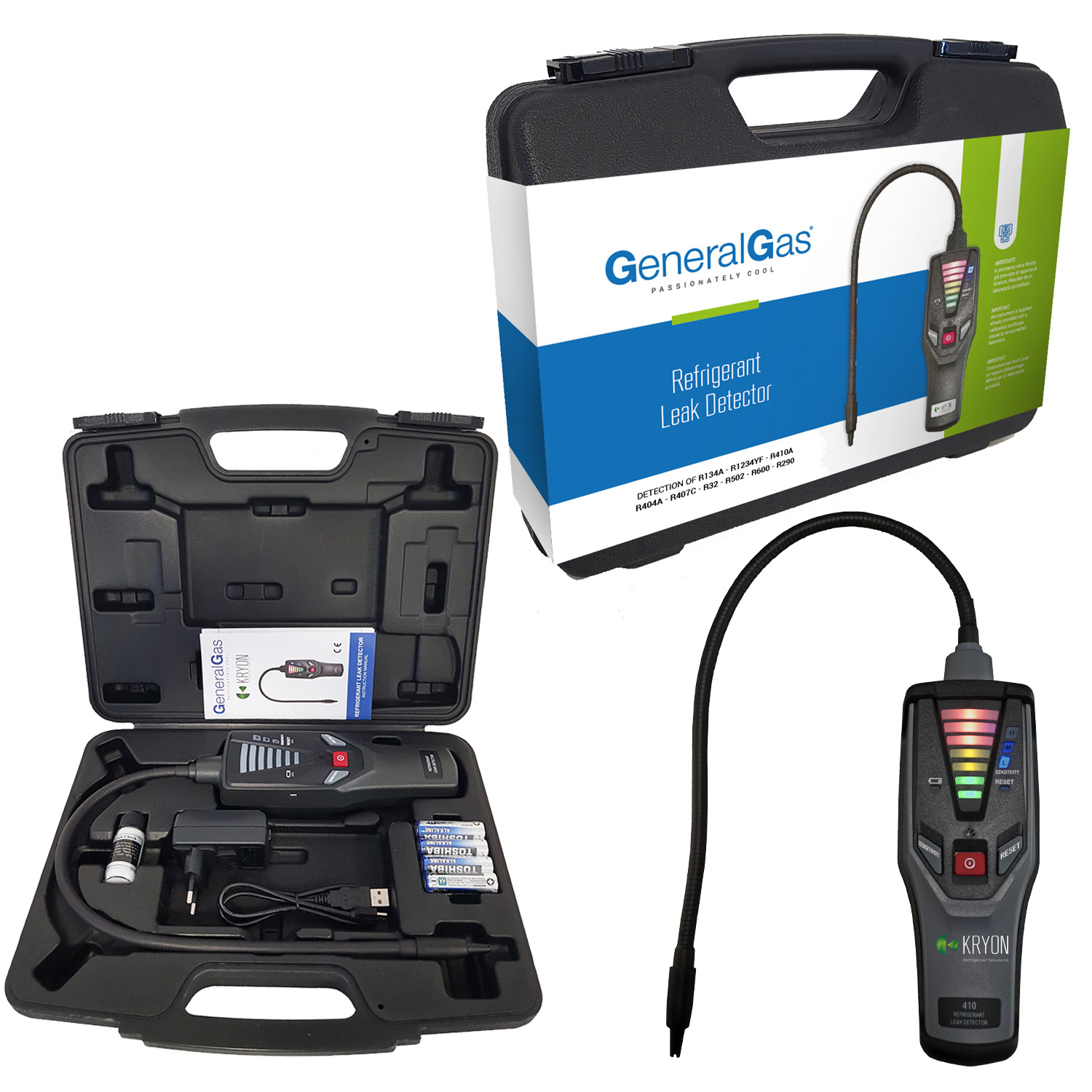
- Power supply: 4 AA alkaline batteries, or via power adapter with MicroUSB connection
- Power adapter 220V / 50Hz - 3.3V / 0.5A (included in the package)
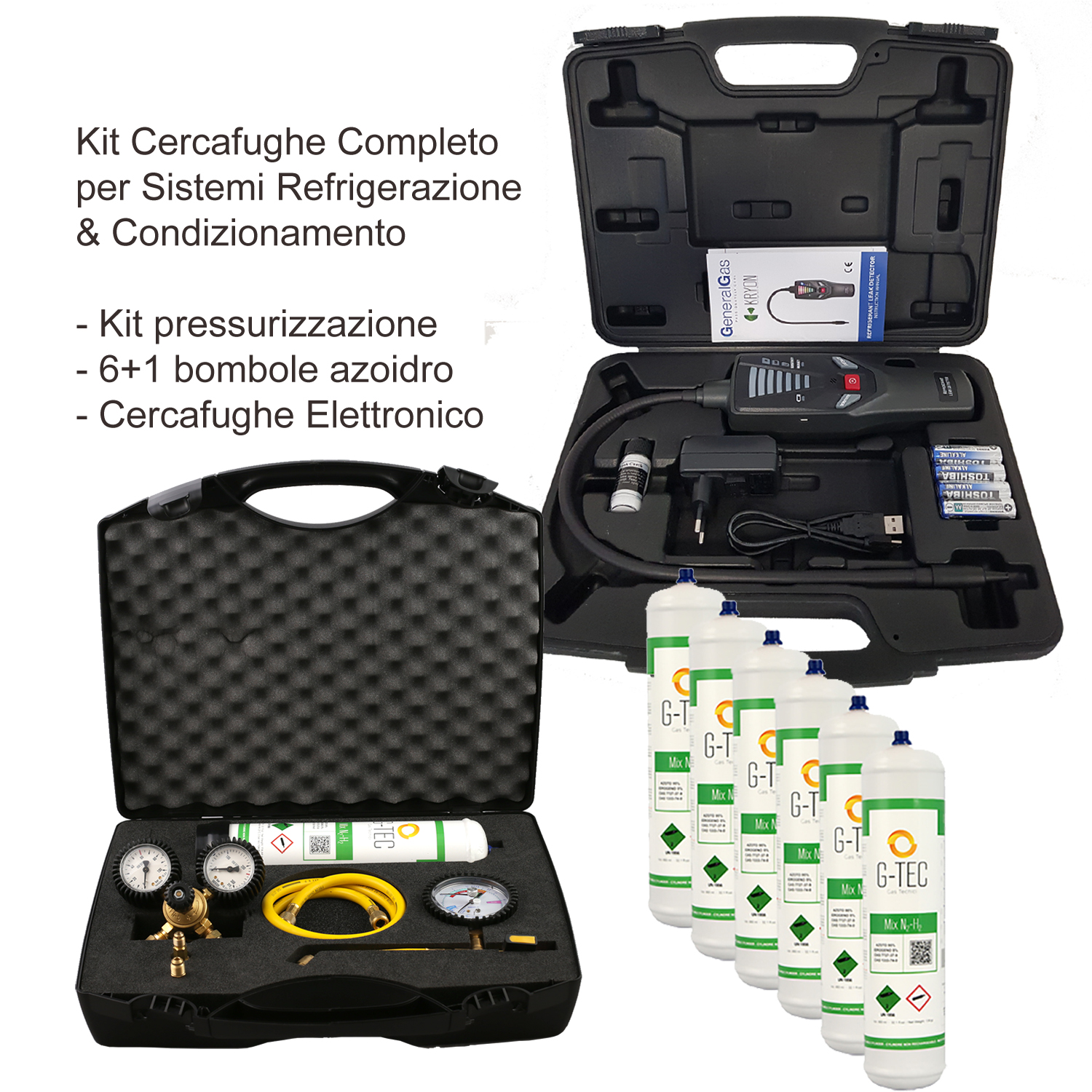
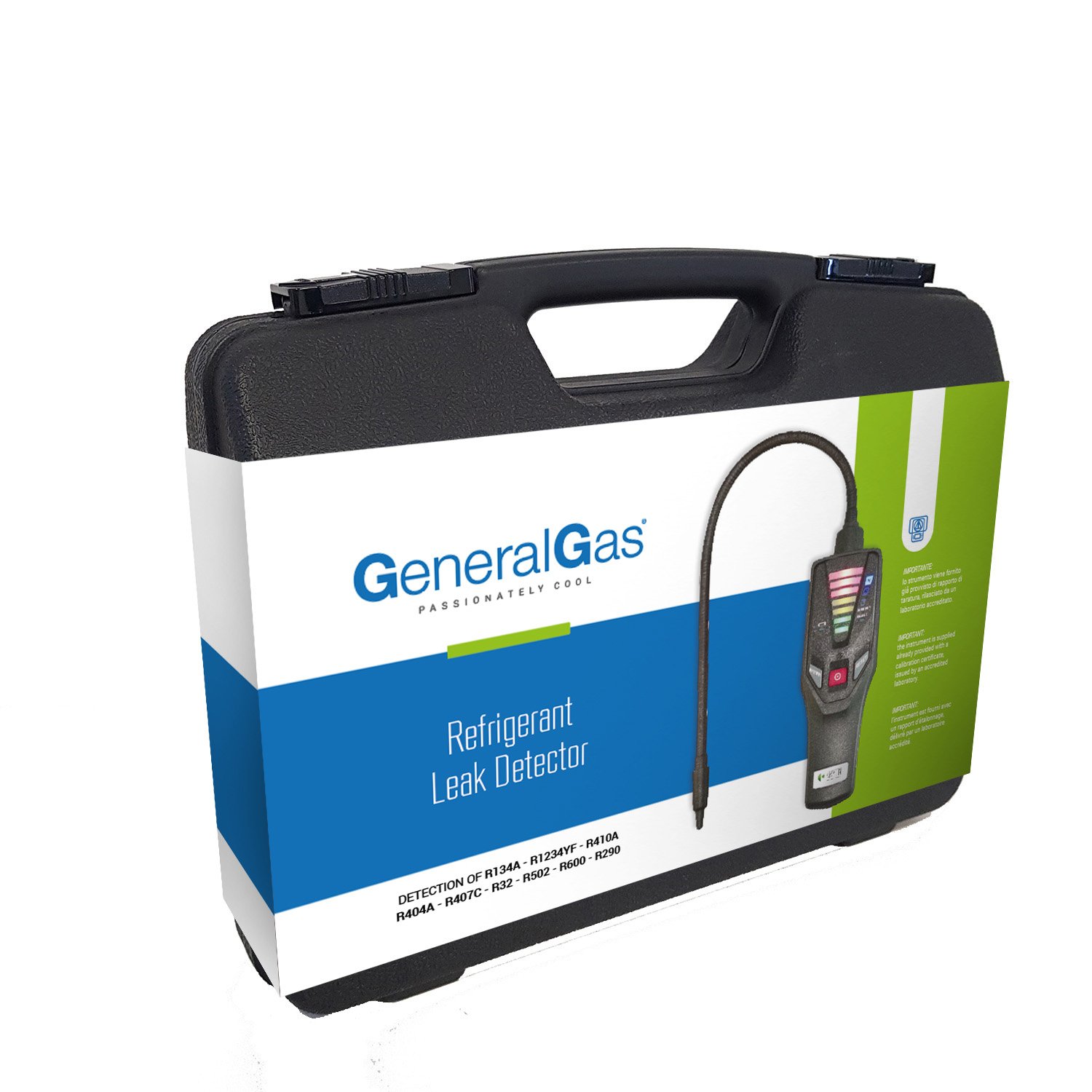
- Plastic carry case for storage and transport
The leak detector is equipped with a heating sensor and microprocessor, which guarantee a realistic and highly precise signal.
Thanks to the intensity adjustment and the presence of 7 LEDs with a colored visual scale function, it can guarantee the detection of leaks below 5ppm (3 grams/year).
Charger and batteries:
AA alkaline batteries are not included. In addition, the package includes a single-phase 220V 50Hz power adapter.
The power adapter also allows connection to the MicroUSB port for direct power supply to the leak detector; the leak detector does not have a battery charging electronic circuit (rechargeable batteries may be used, but these must be charged with a dedicated charger).
Nitrogen-hydrogen mixture (or hydronitrogen): the ally for leak testing and repair in refrigeration circuits
What is the nitrogen-hydrogen mixture?
The nitrogen-hydrogen mixture is a non-flammable blend of 95% nitrogen and 5% hydrogen. This composition offers the right balance between effectiveness in leak detection and safety in use.
The nitrogen-hydrogen mixture has the exact same functionality as 100% nitrogen; it is anhydrous, and can therefore be used to flush the system, and is suitable for pressure testing, with pressure values identical to nitrogen.
Compared to plain nitrogen, the nitrogen-hydrogen mixture has a major advantage: the hydrogen molecule can be easily detected with a heated diode (semiconductor) electronic leak detector, which allows the leak point to be identified with absolute precision.
The hydrogen molecule also has an extremely small mass, 28 times smaller than that of nitrogen; as a result, the molecule permeates micro-leaks that would be undetectable with other systems.
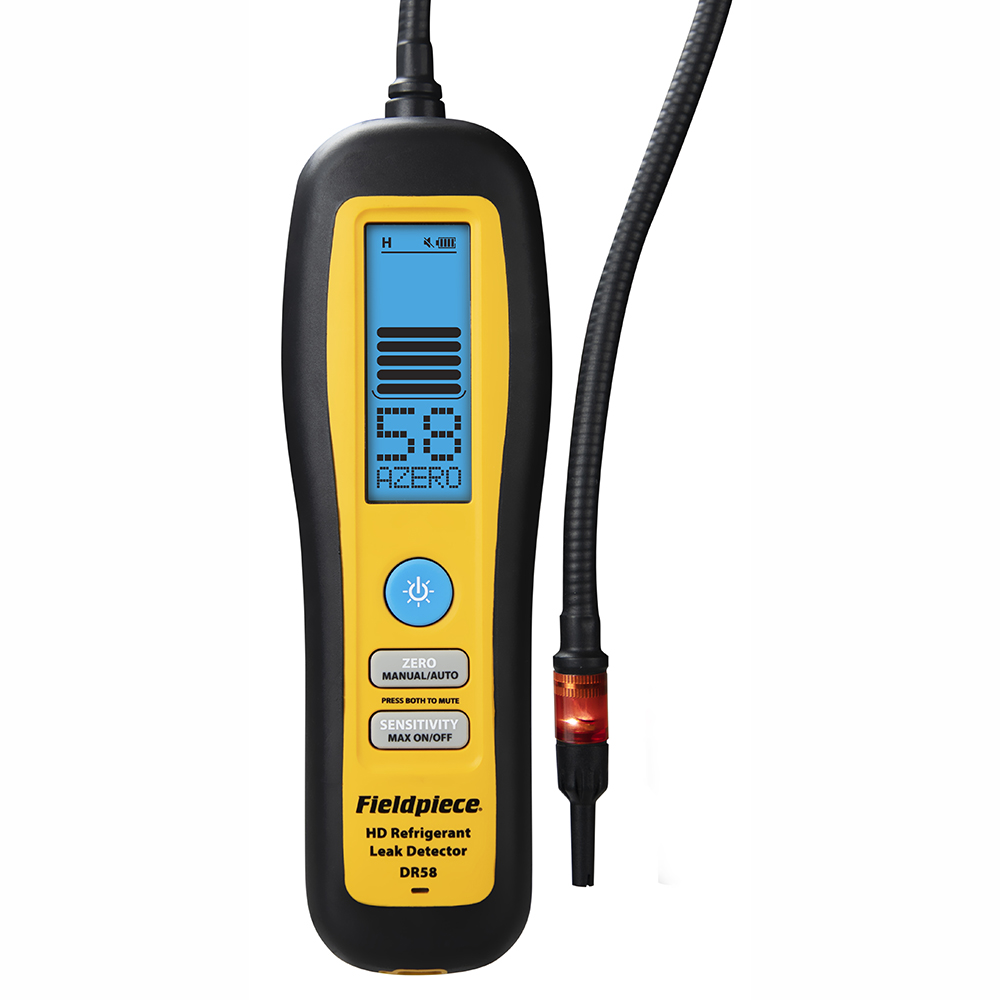
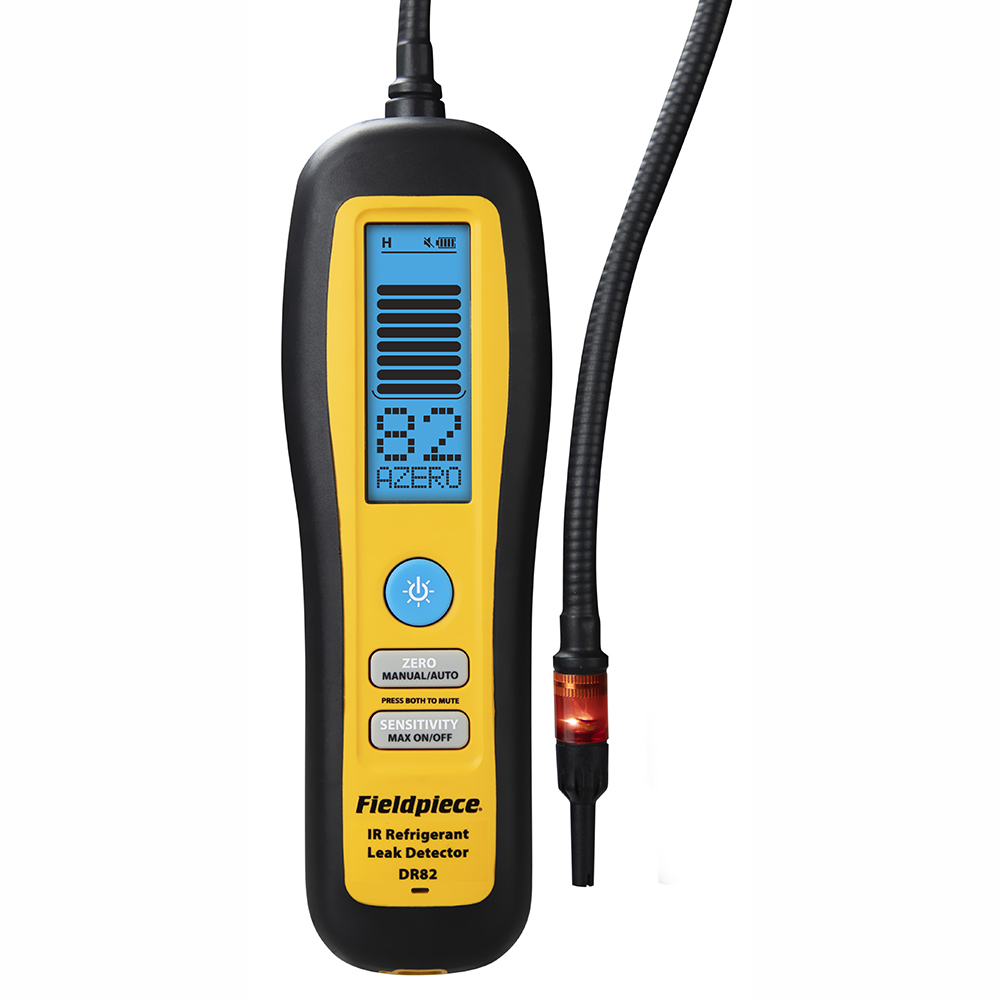
Important note: the nitrogen-hydrogen mixture is not detected by infrared sensor leak detectors, but only by heated diode ones (Fieldpiece DR58, Fieldpiece DRX3, Kryon).
Leak testing of new systems with the nitrogen-hydrogen mixture
The installation phase of a new refrigeration system is crucial. Ensuring it is leak-free in compliance with current regulations from the outset prevents costly problems in the future.
Procedure:
- Empty the system of any gas or air present;
- Pressurize the system with the nitrogen-hydrogen mixture; it is also possible to use the mixture for the pressure test, in the same way as is usually done with the nitrogen test (the test pressure is identical between nitrogen and the nitrogen-hydrogen mixture);
- Use a heated diode leak detector to carefully check all connections, joints and components, ensuring that the entire system is leak-tight (important: infrared leak detectors are not suitable for this purpose, as they are unable to detect the hydrogen molecule present in the nitrogen-hydrogen mixture)
Leak detection in existing systems with the nitrogen-hydrogen mixture
Over time, systems can develop leaks due to wear, vibration or other external factors. The nitrogen-hydrogen mixture is essential for locating these leaks and ensuring effective repairs.
Procedure:
- Empty the system of any gas or air present;
- Pressurize the system with the nitrogen-hydrogen mixture; it is also possible to use the mixture for the pressure test, in the same way as is usually done with the nitrogen test (the test pressure is identical between nitrogen and the nitrogen-hydrogen mixture);
- Use a heated diode leak detector to carefully check all connections, joints and components, ensuring that the entire system is leak-tight (important: infrared leak detectors are not suitable for this purpose, as they are unable to detect the hydrogen molecule present in the nitrogen-hydrogen mixture)
Required equipment:
- Heated diode leak detector:
- High-pressure gauge and line gauge kit
- High-pressure nitrogen-hydrogen cylinder
Conclusions
Whether commissioning a new system or maintaining an existing one, the nitrogen-hydrogen mixture, together with heated diode leak detectors, has proven to be an invaluable tool.
It offers a safe, effective and non-invasive solution, ensuring that refrigeration circuits operate at their best for years.
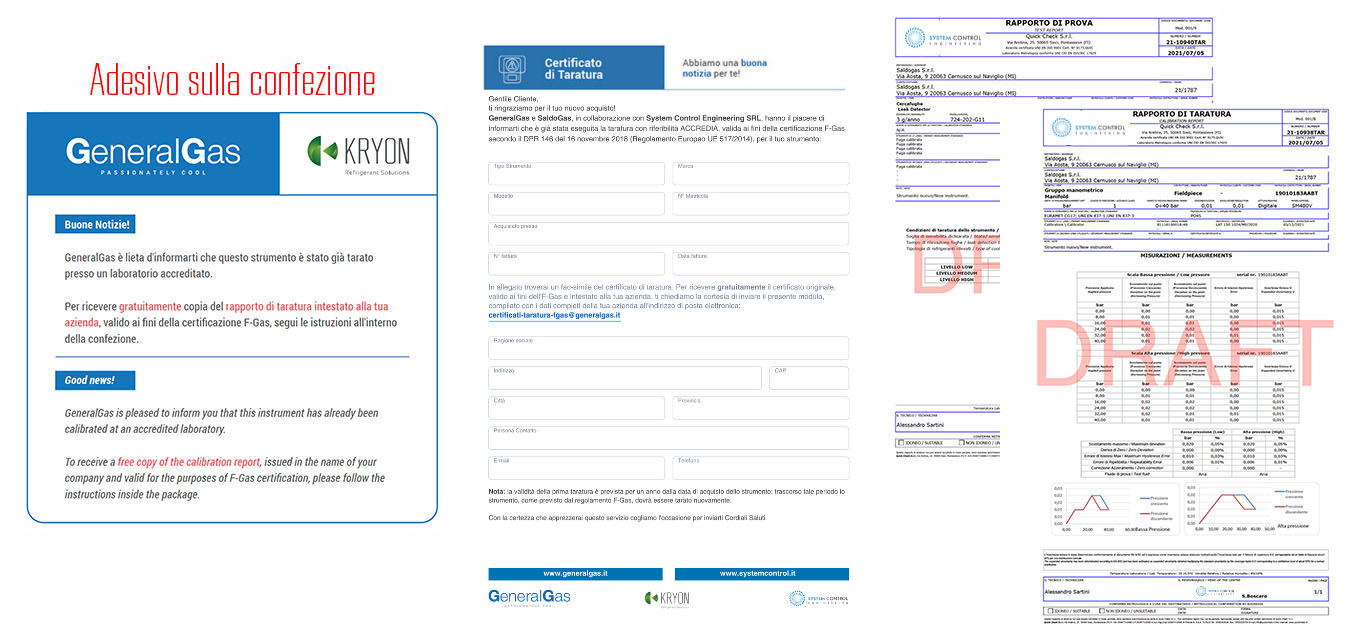
IMPORTANT: the instrument is supplied with a calibration report, issued by an accredited laboratory (System Control Engineering S.r.l.- systemcontrol.it)
The instrument, before being placed on the market, has already been calibrated at our care and expense at the accredited laboratory.
Inside the package you will find a form; fill it in with the details of the instrument you purchased (including invoice number and purchase date), and send it to the email address certificati-taratura-fgas@generalgas.it
Once we receive the completed form, we will send you, free of charge, the calibration report issued in your company's name and showing the model and serial number of the instrument (certificate valid for F-Gas certification purposes).