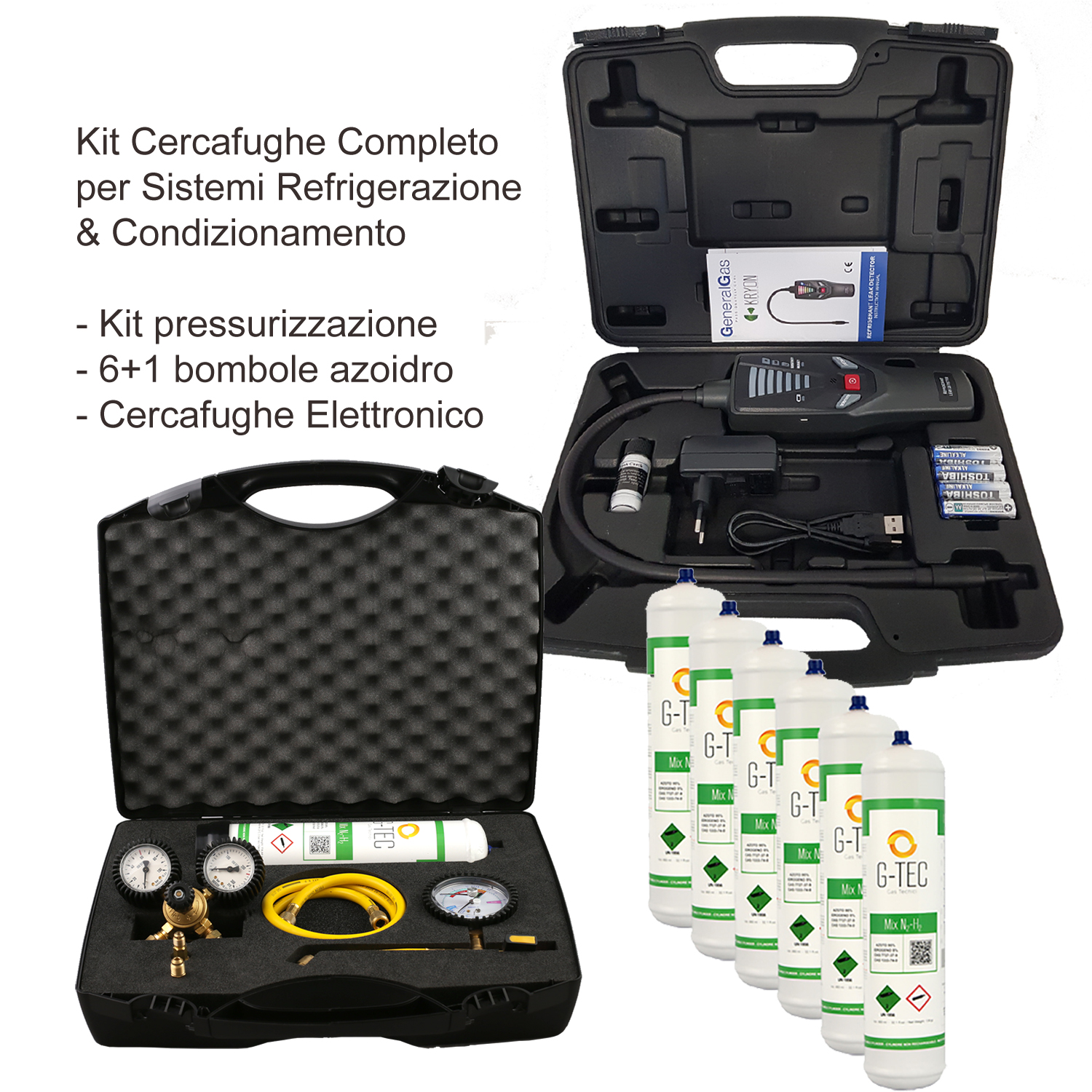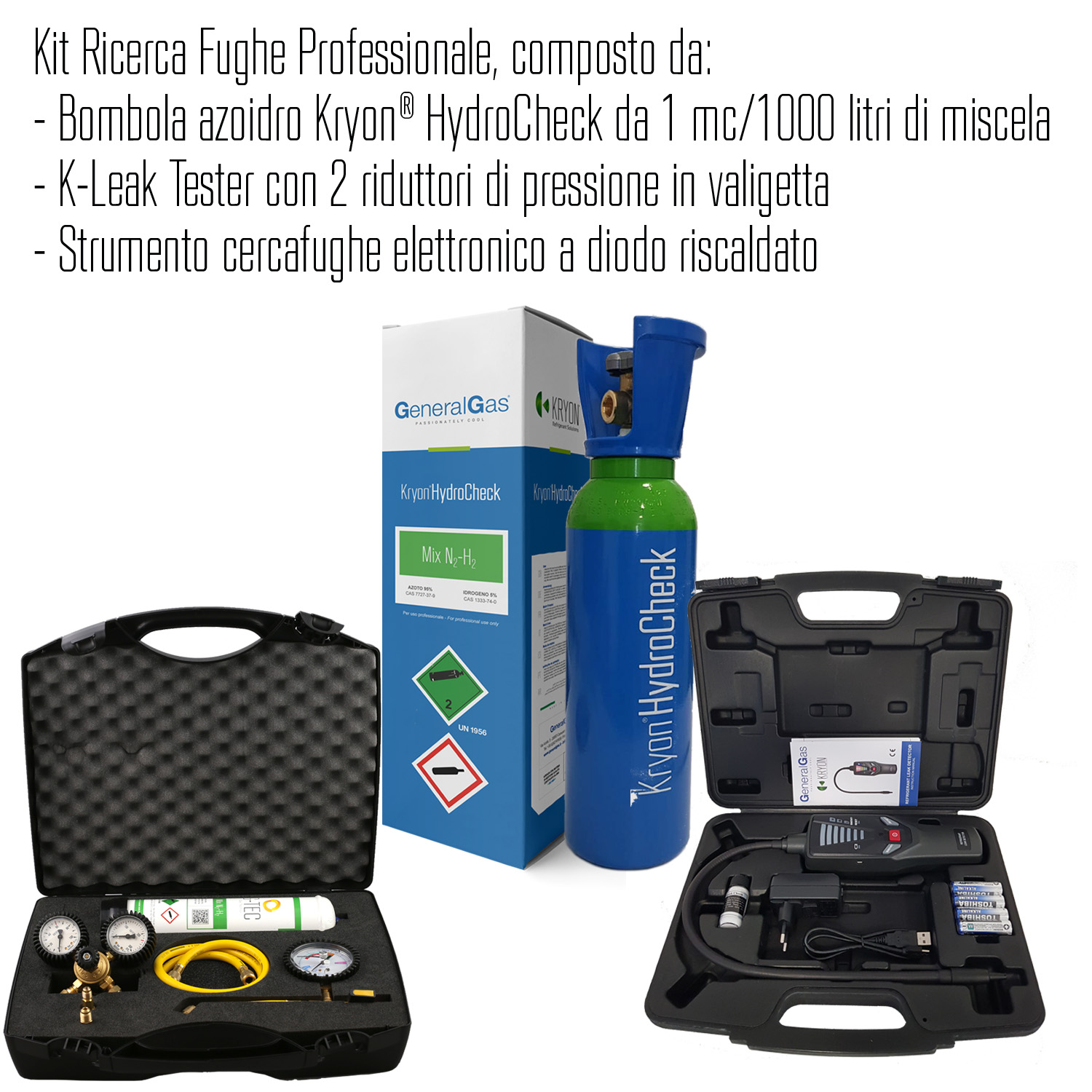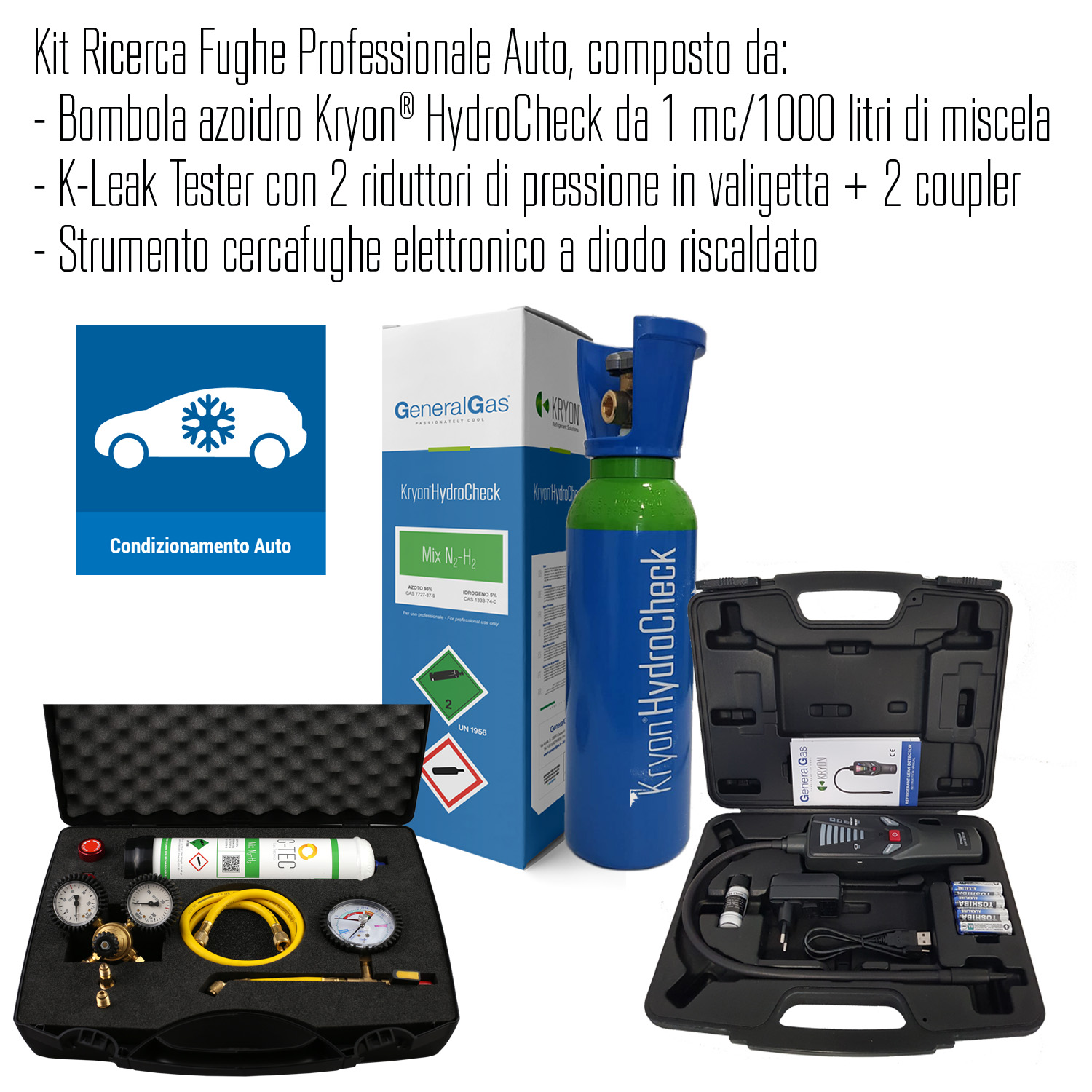
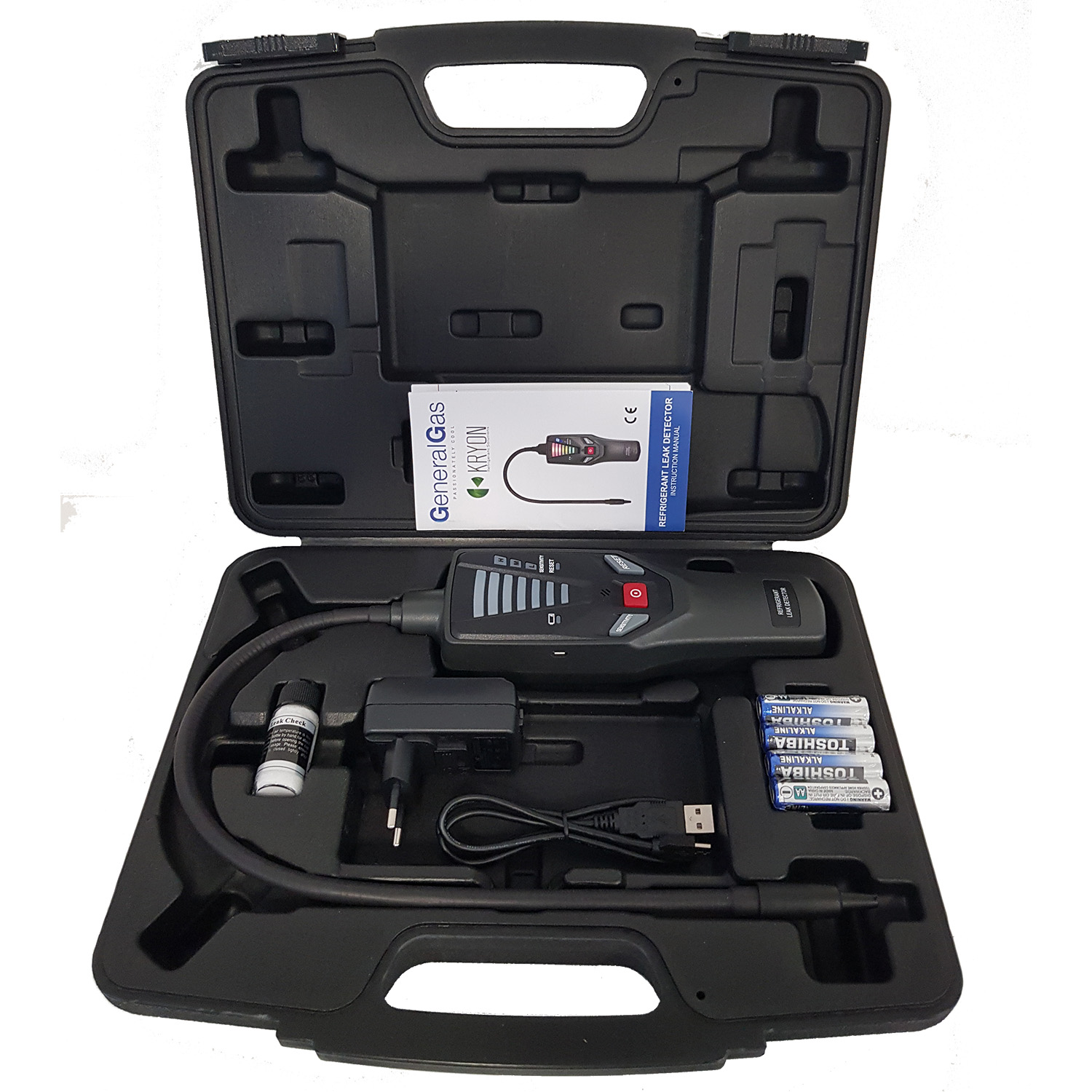
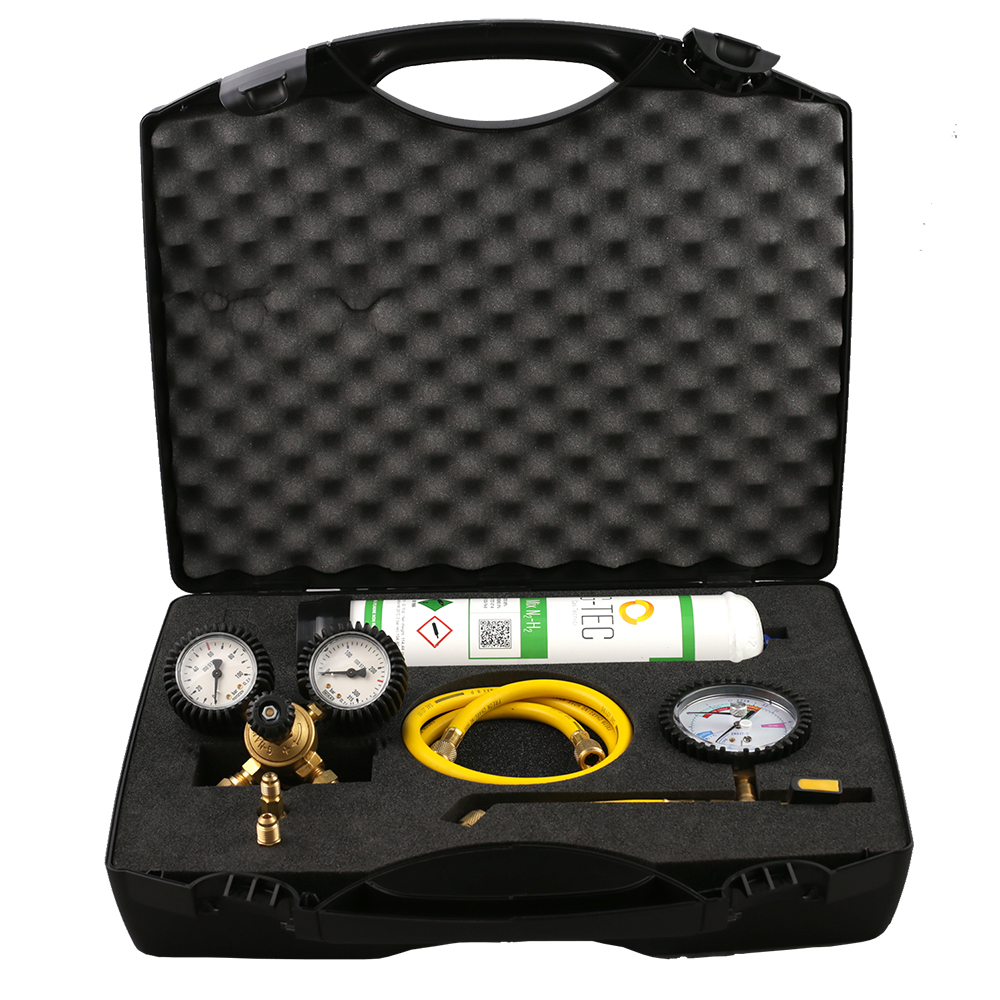








Complete professional kit for leak detection on residential refrigeration and air conditioning systems, consisting of:
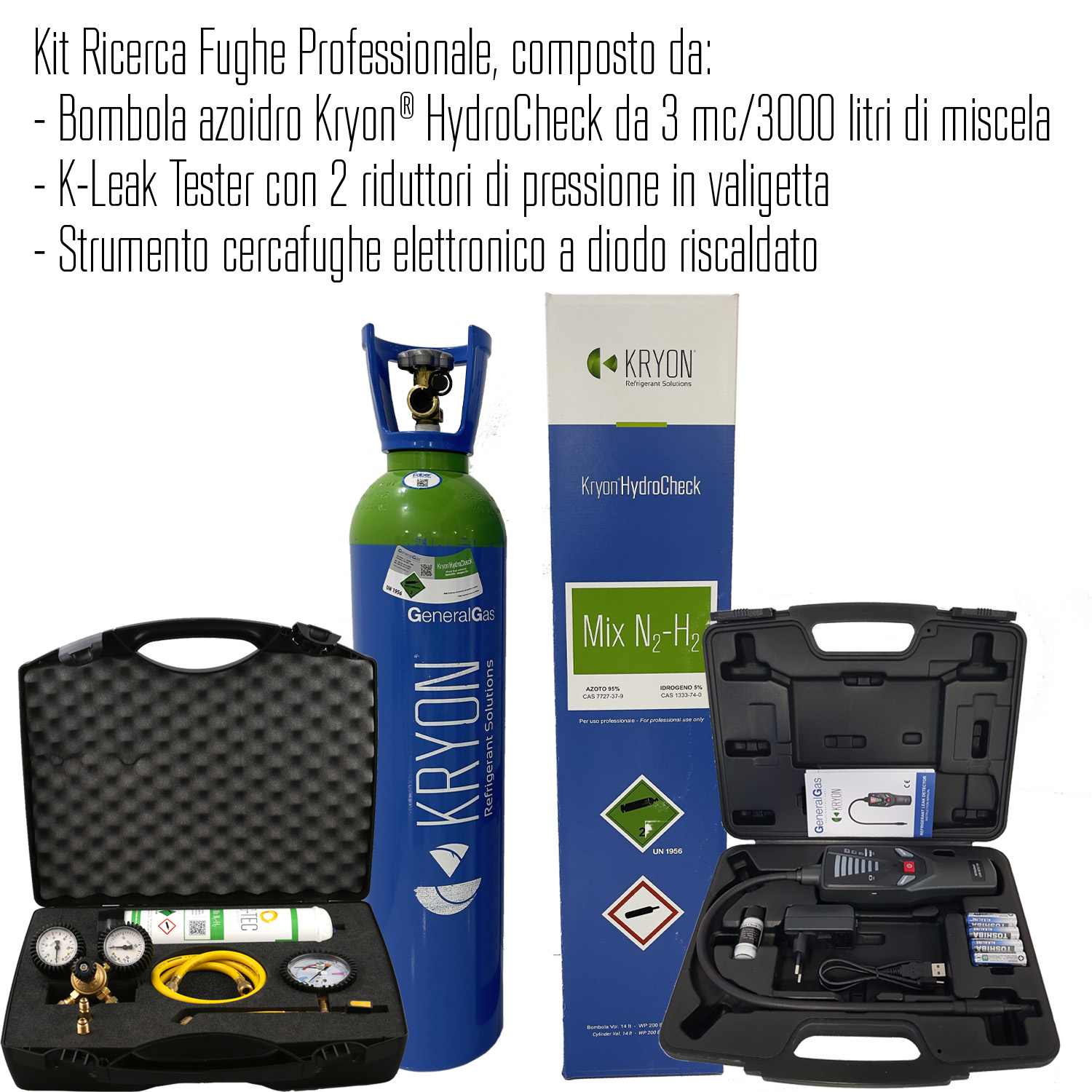
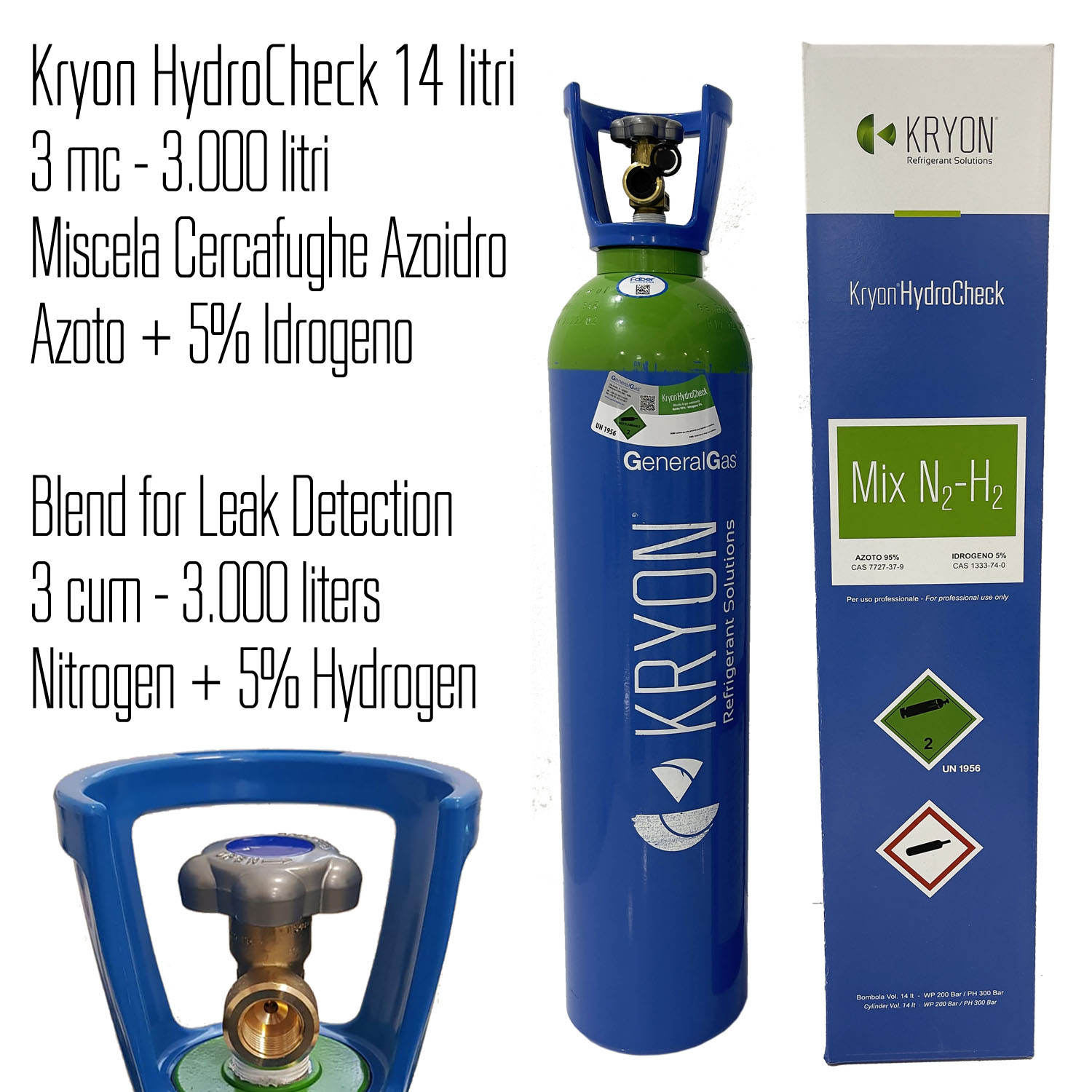
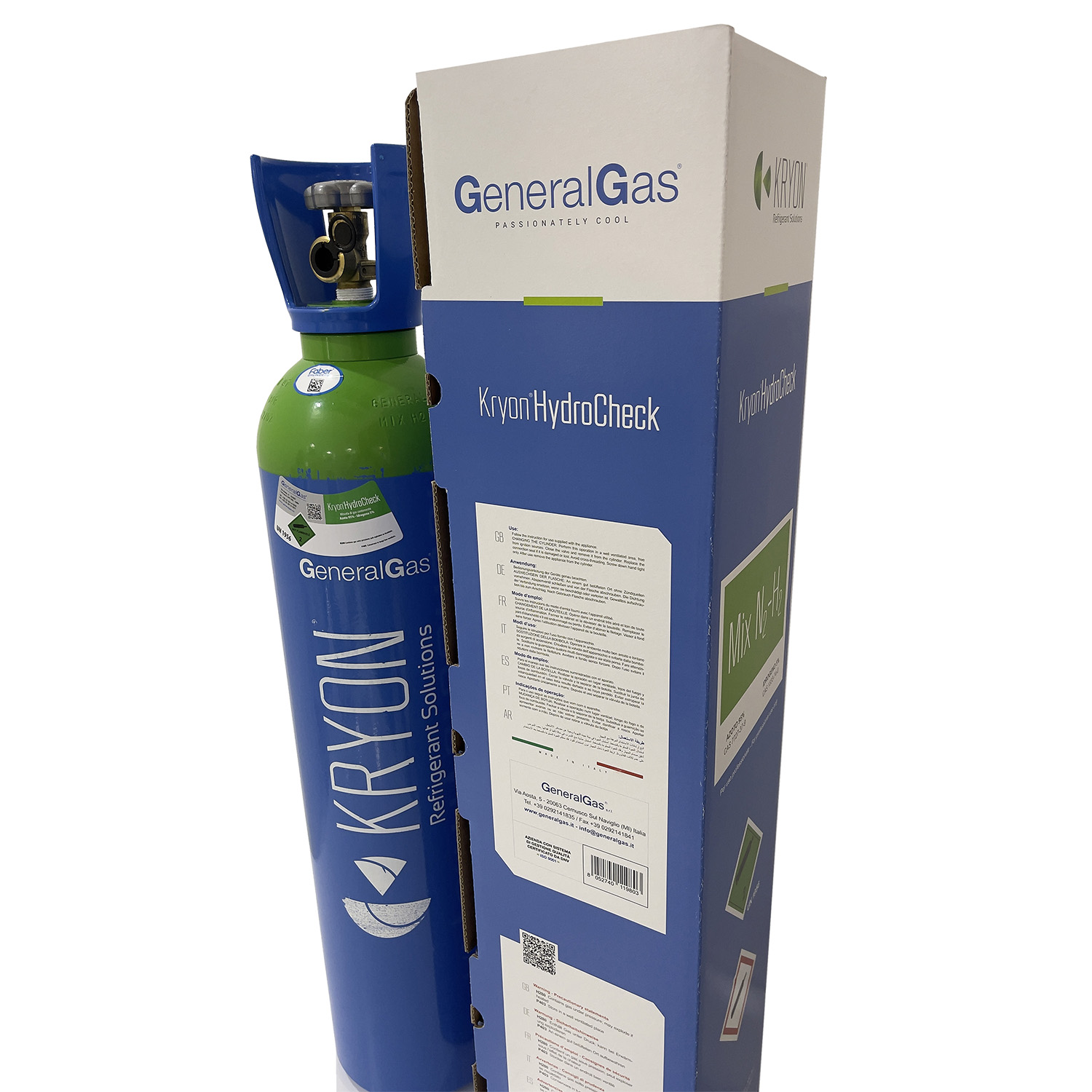
- 14-litre/200 bar Kryon® HydroCheck cylinder containing 3 m³ (3,000 litres) of nitrogen/5% hydrogen mixture (nitrohydrogen)
- K-Leak Tester nitrogen/hydrogen kit comprising:
- Plastic carrying case
- Yellow flexible hose with ball valve and pressure gauge (with colour-coded sectors according to gas type)
- Yellow flexible hose 1,000 mm length – 4000 psi
- Adapter ¼” SAE female – 5/16” SAE male
- Adapter ¼” SAE male – 5/16” female
- Nitrogen pressure reducer (maximum outlet pressure 50 bar)
- G-TEC nitrogen/5% hydrogen (N2-H2) cylinder – capacity 0.95 litres – N2/H2 mixture content 105 Nlt./114 g
- Plastic support base for 0.95 lt nitrogen cylinder
- Cardboard box
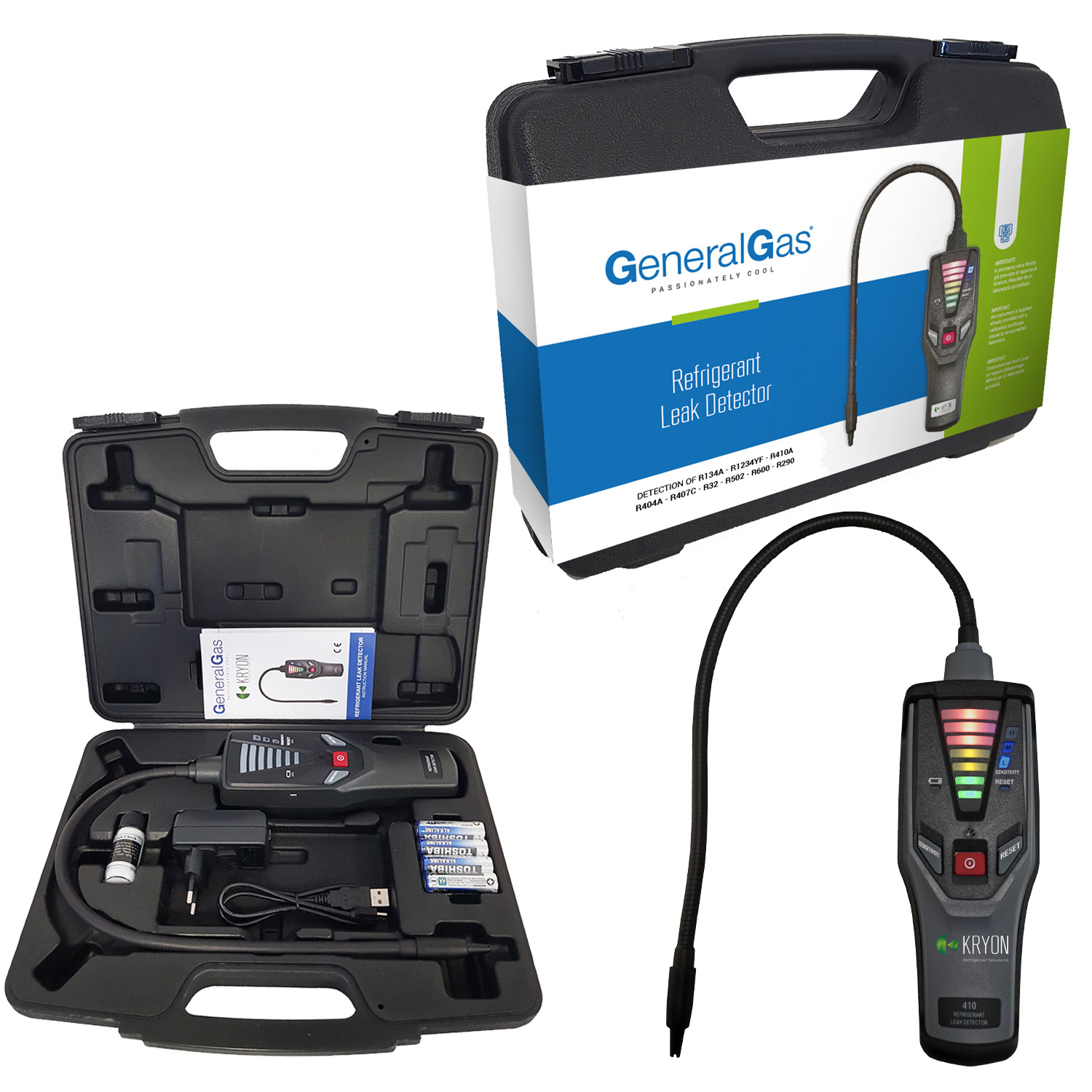
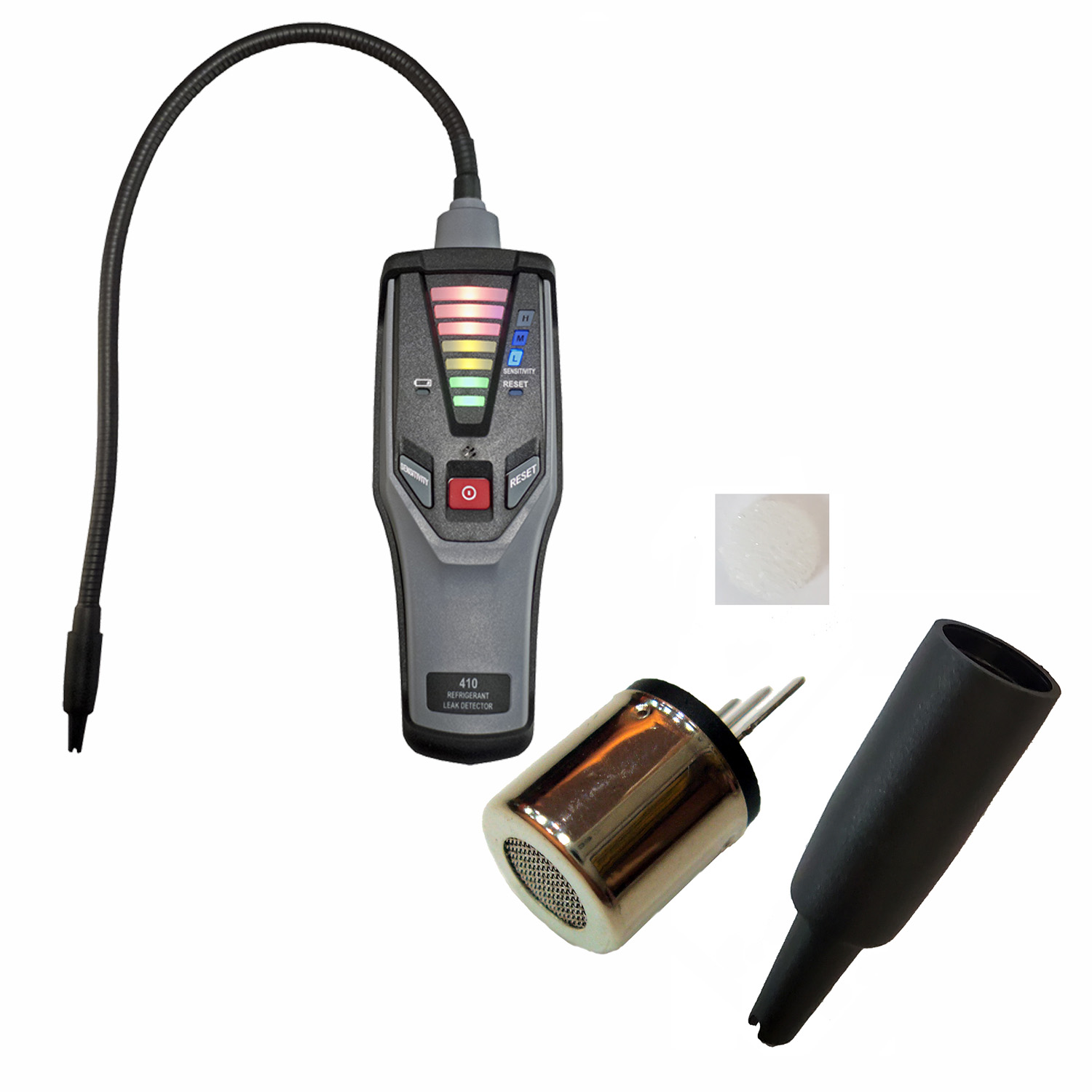
- Kit instructions - Kryon® universal electronic leak detector for Refrigerant Gases and Nitrogen-Hydrogen Mixtures (designed to detect a gas mixture of 5% Hydrogen (H2) + 95% Nitrogen (N2)). Also capable of detecting Refrigerant Gases R134a, R410A, R407C, R1234yf, R32, R404A - R502 and hydrocarbons R600 and R290. The leak detector is equipped with a heated sensor and microprocessor, ensuring a realistic and highly precise signal. Thanks to intensity adjustment and 7 LEDs with a visual colour-scale function, it can detect leaks below 5 ppm (2 g/year).
Nitrohydrogen (or hydronitrogen): the ally for leak detection and repair in refrigeration circuits
What is nitrohydrogen?
Nitrohydrogen is a non-flammable mixture of 95% nitrogen and 5% hydrogen. This composition offers the right balance between effectiveness in leak detection and safety in use.
Nitrohydrogen has exactly the same functionality as 100% nitrogen; it is anhydrous and can therefore be used to flush the system, and is suitable for pressure testing, with pressure values identical to nitrogen.
Compared to plain nitrogen, nitrohydrogen has a major advantage: the hydrogen molecule can be easily detected with a heated diode (semiconductor) electronic leak detector, which allows the leak point to be identified with absolute precision.
The hydrogen molecule also has an extremely small mass, 28 times smaller than that of nitrogen; as a result, the molecule permeates micro-leaks that would be undetectable with other methods.
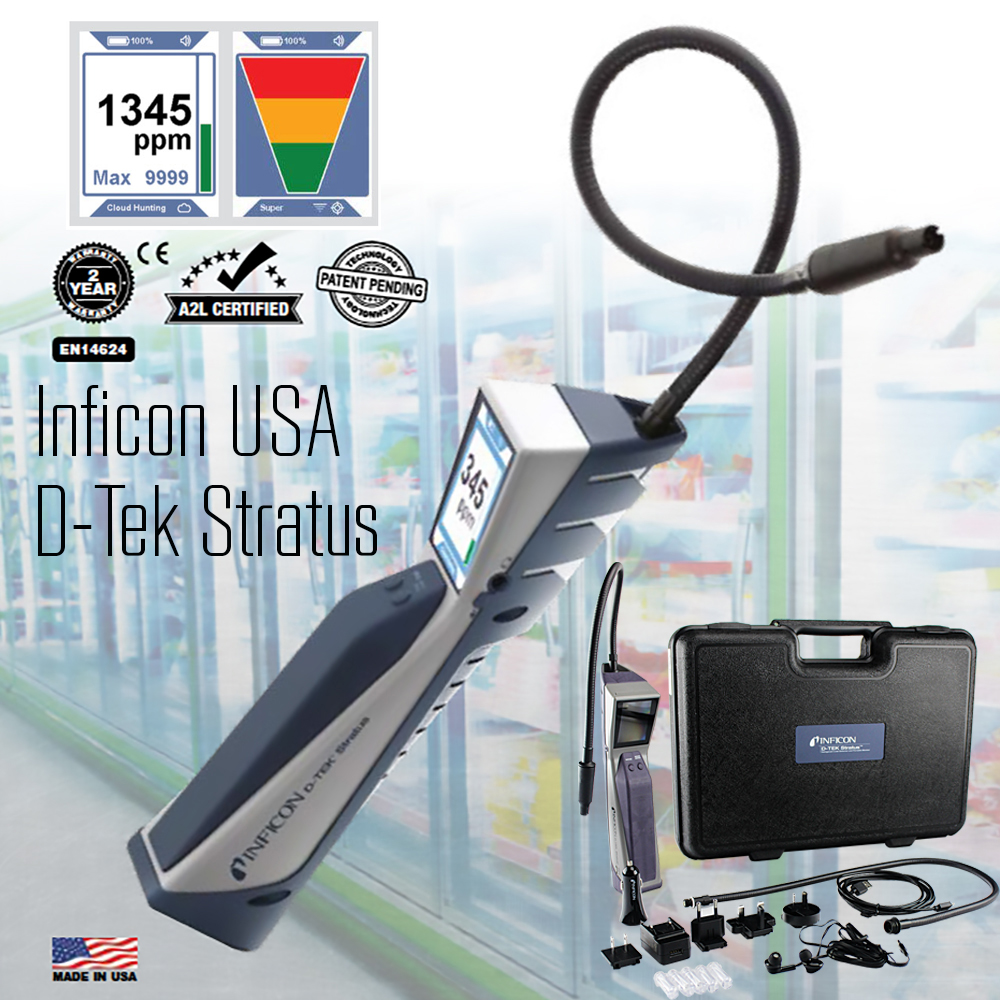
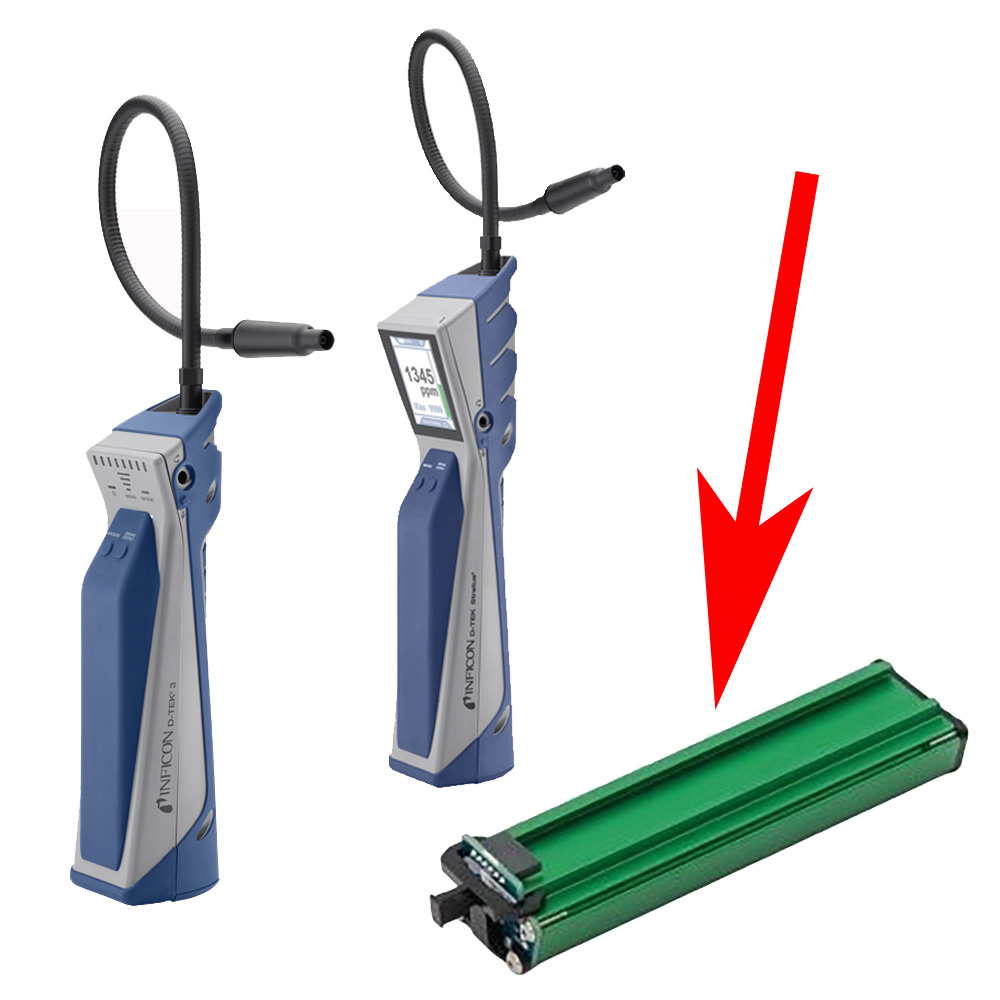
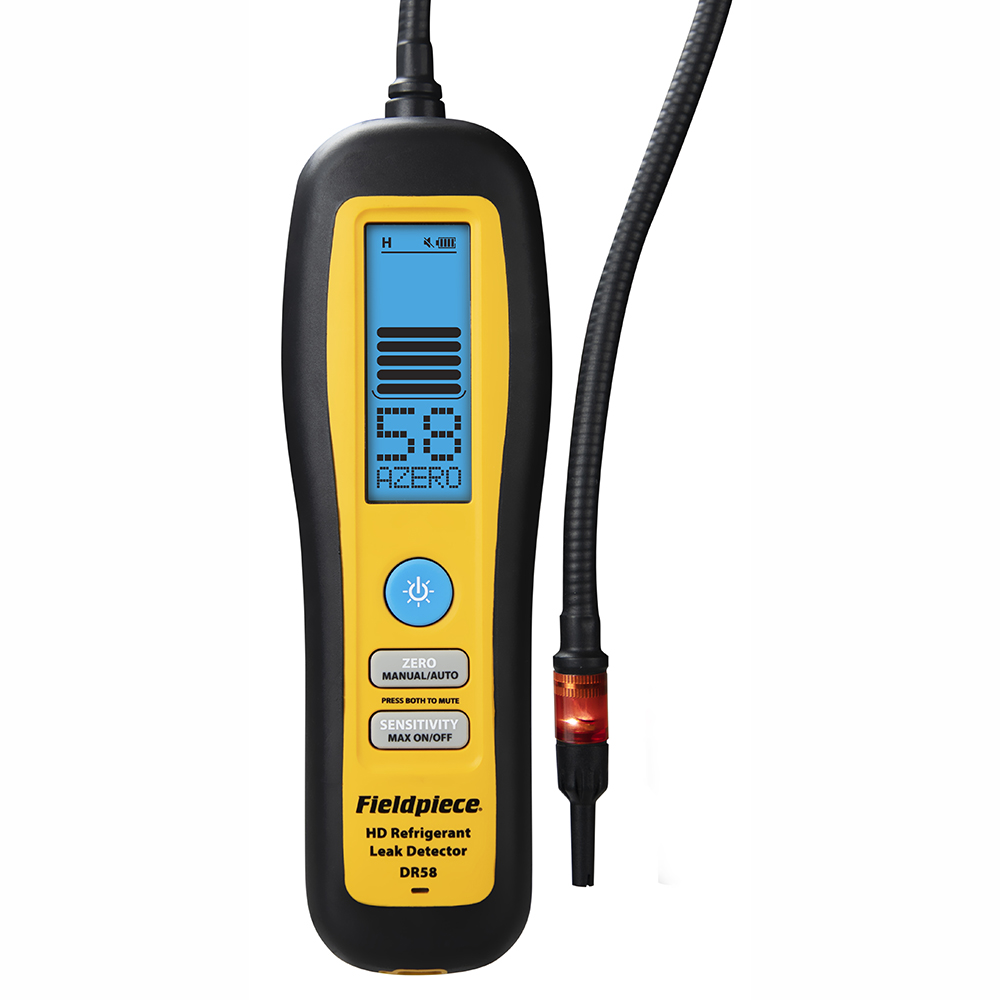
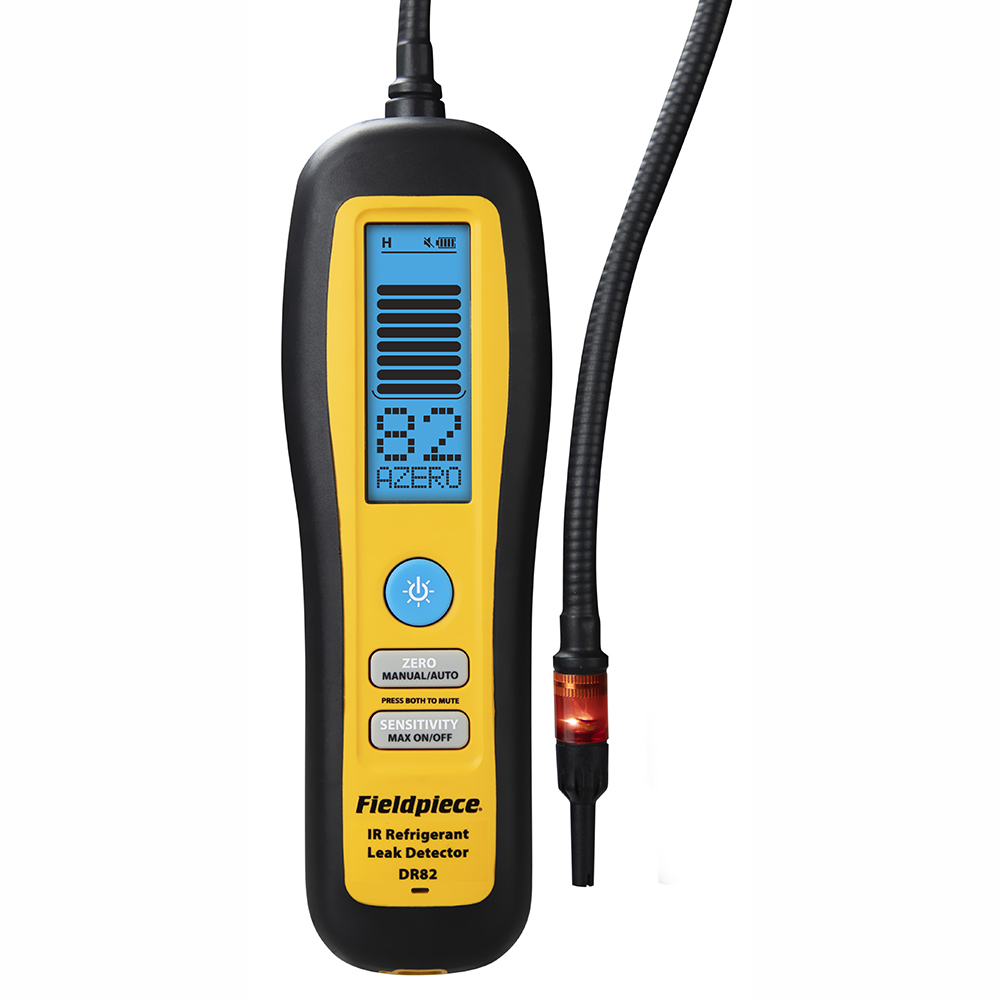
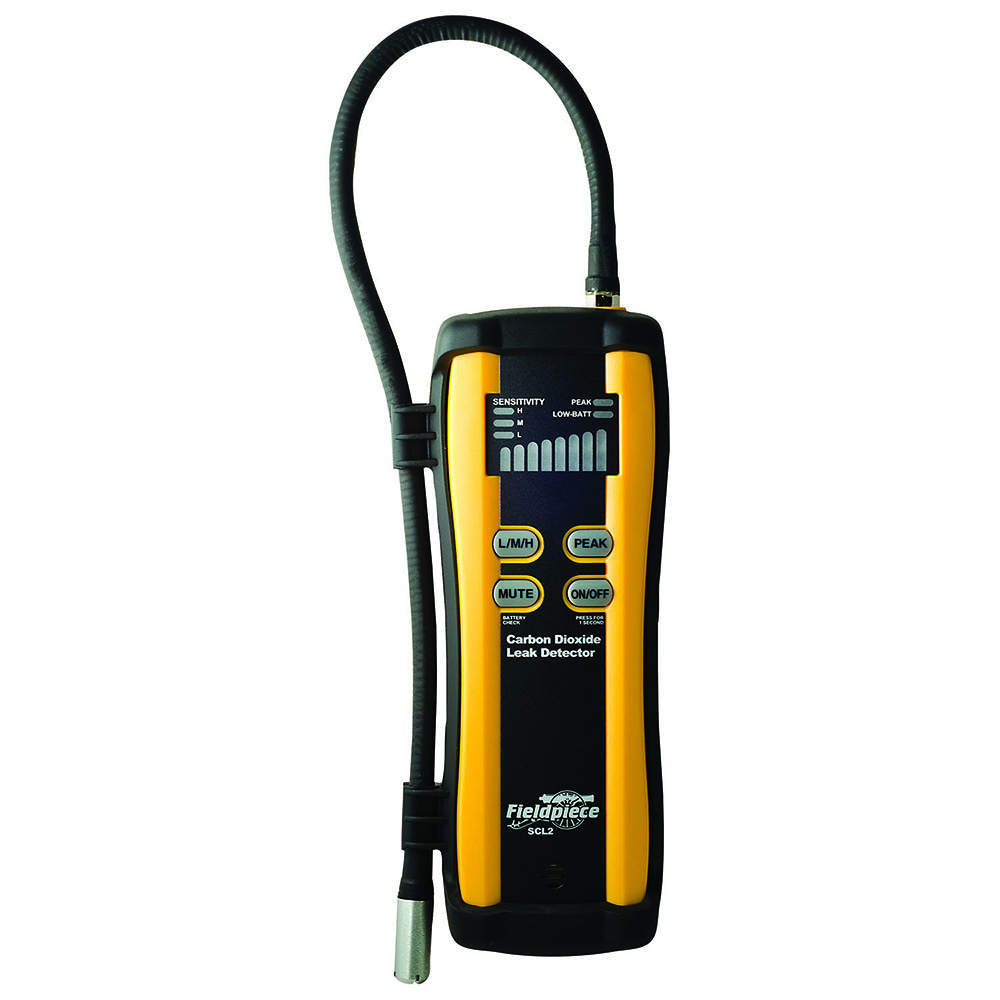
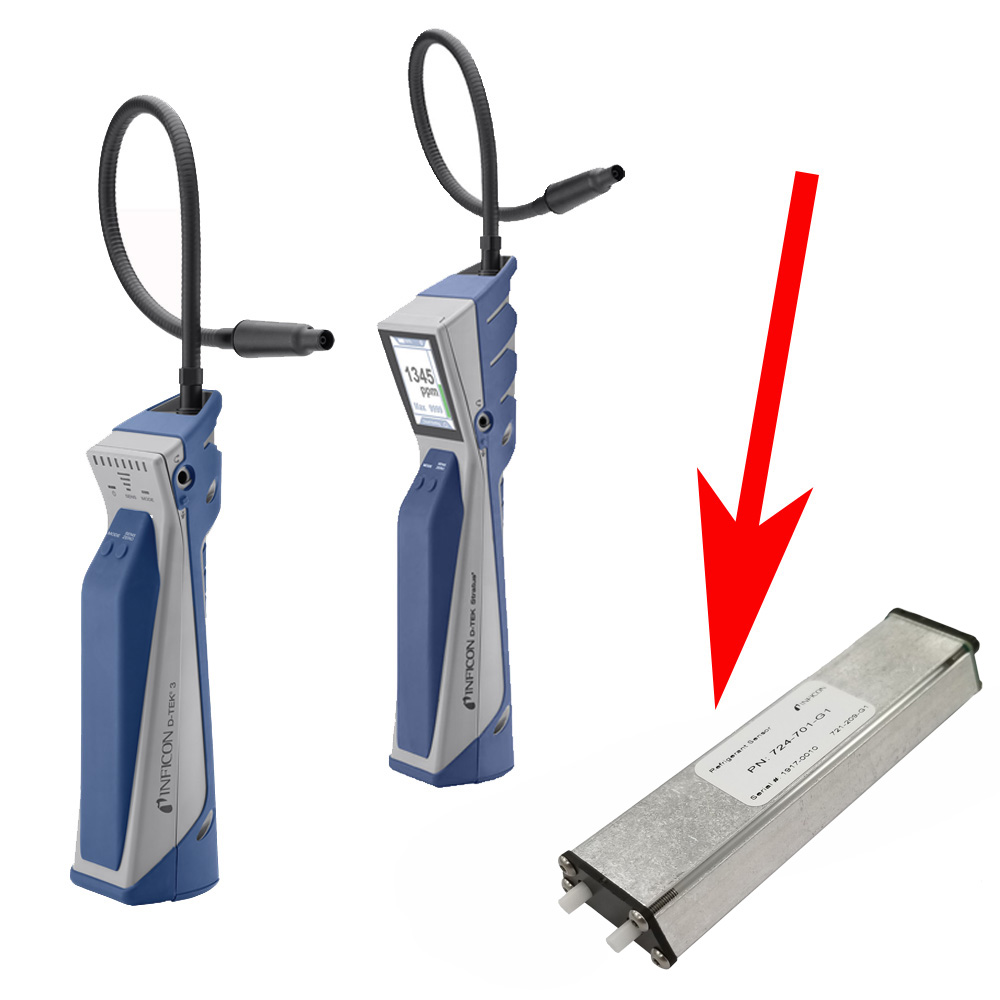
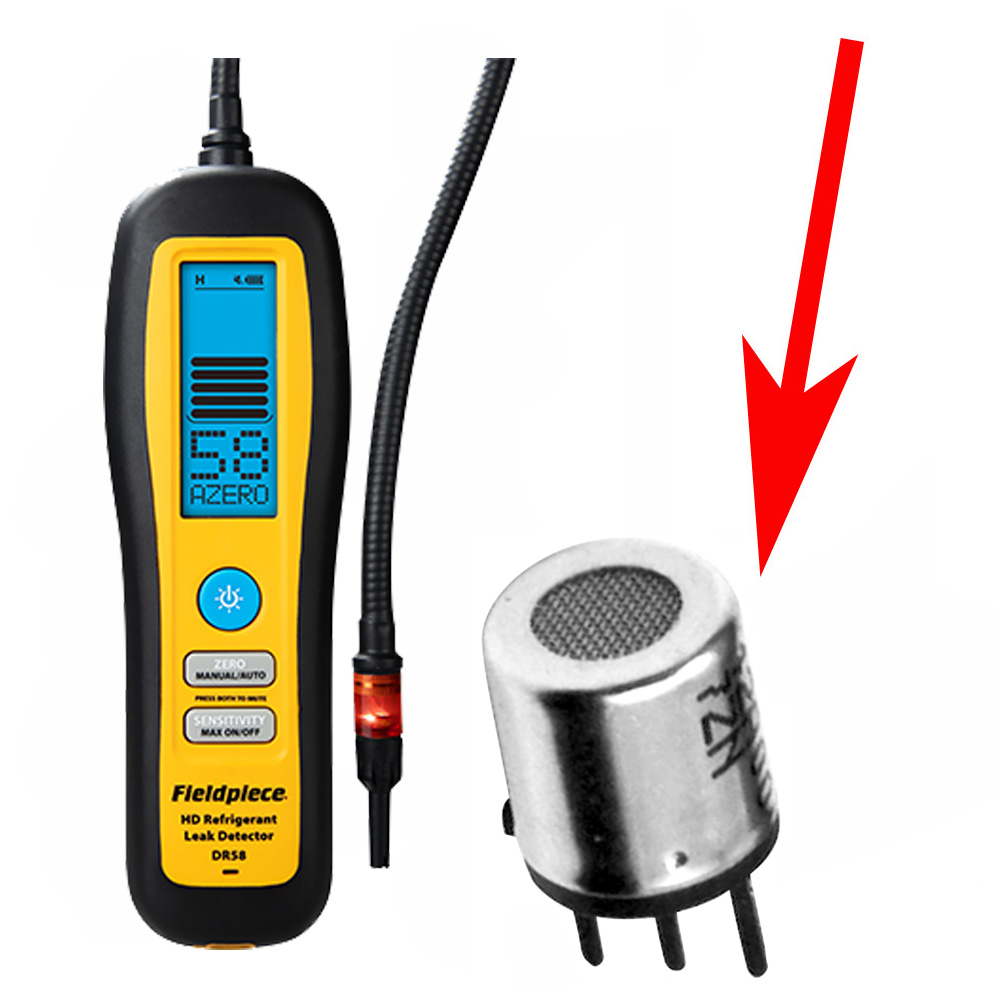
Important note: nitrohydrogen is not detected by infrared sensor leak detectors, but only by heated diode ones (Fieldpiece DR58, Fieldpiece DRX3, Kryon).
Leak testing of new systems with nitrohydrogen
The installation phase of a new refrigeration system is crucial. Ensuring it is leak-free in compliance with current regulations from the outset helps prevent costly problems in the future.
Procedure:
- Evacuate the system of any gas or air present;
- Pressurise the system with nitrohydrogen; it is also possible to use nitrohydrogen for the pressure test, in the same way as is commonly done with a nitrogen test (the test pressure is identical between nitrogen and nitrohydrogen);
- Use a heated diode leak detector to carefully check all connections, joints, and components, ensuring that the entire system is airtight (important: infrared leak detectors are not suitable for this purpose, as they are unable to detect the hydrogen molecule present in nitrohydrogen).
Leak detection in existing systems with nitrohydrogen
Over time, systems can develop leaks due to wear, vibration, or other external factors. Nitrohydrogen is essential for locating these leaks and ensuring effective repairs.
Procedure:
- Evacuate the system of any gas or air present;
- Pressurise the system with nitrohydrogen; it is also possible to use nitrohydrogen for the pressure test, in the same way as is commonly done with a nitrogen test (the test pressure is identical between nitrogen and nitrohydrogen);
- Use a heated diode leak detector to carefully check all connections, joints, and components, ensuring that the entire system is airtight (important: infrared leak detectors are not suitable for this purpose, as they are unable to detect the hydrogen molecule present in nitrohydrogen).
Required equipment:
- Heated diode leak detector:
- High-pressure gauge and line gauge kit
- High-pressure nitrohydrogen container
Conclusions
Whether commissioning a new system or maintaining an existing one, nitrohydrogen, combined with heated diode leak detectors, has proven to be an invaluable tool.
It offers a safe, effective, and non-invasive solution, ensuring that refrigeration circuits operate at their best for years to come.
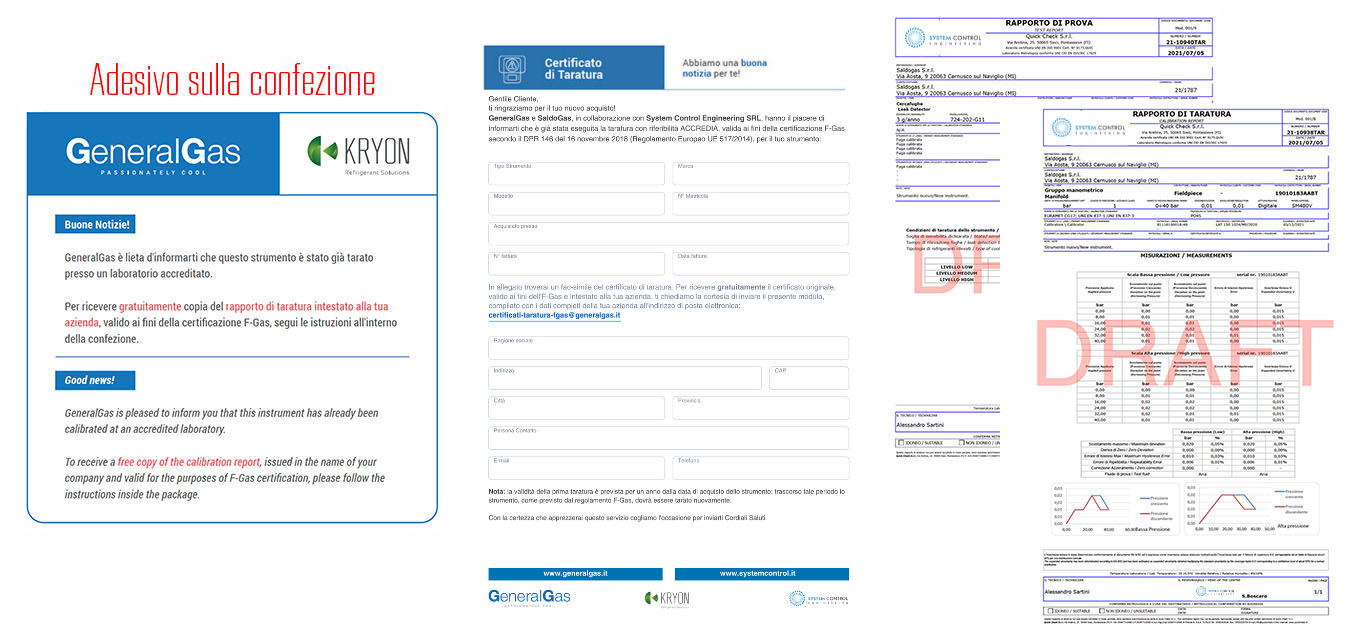
IMPORTANT: the instrument is supplied with a calibration report issued by an accredited laboratory (System Control Engineering S.r.l. - systemcontrol.it)
The instrument, before being placed on the market, has already been calibrated at our expense at the accredited laboratory.
In the package you will find a form — fill it in with the details of the instrument you purchased (including invoice number and purchase date), and send it to the certified email address: certificati-taratura-fgas@generalgas.it
Once we receive the completed form, we will send you, free of charge, the calibration report made out to your company and showing the model and serial number of the instrument (certificate valid for F-Gas certification purposes).